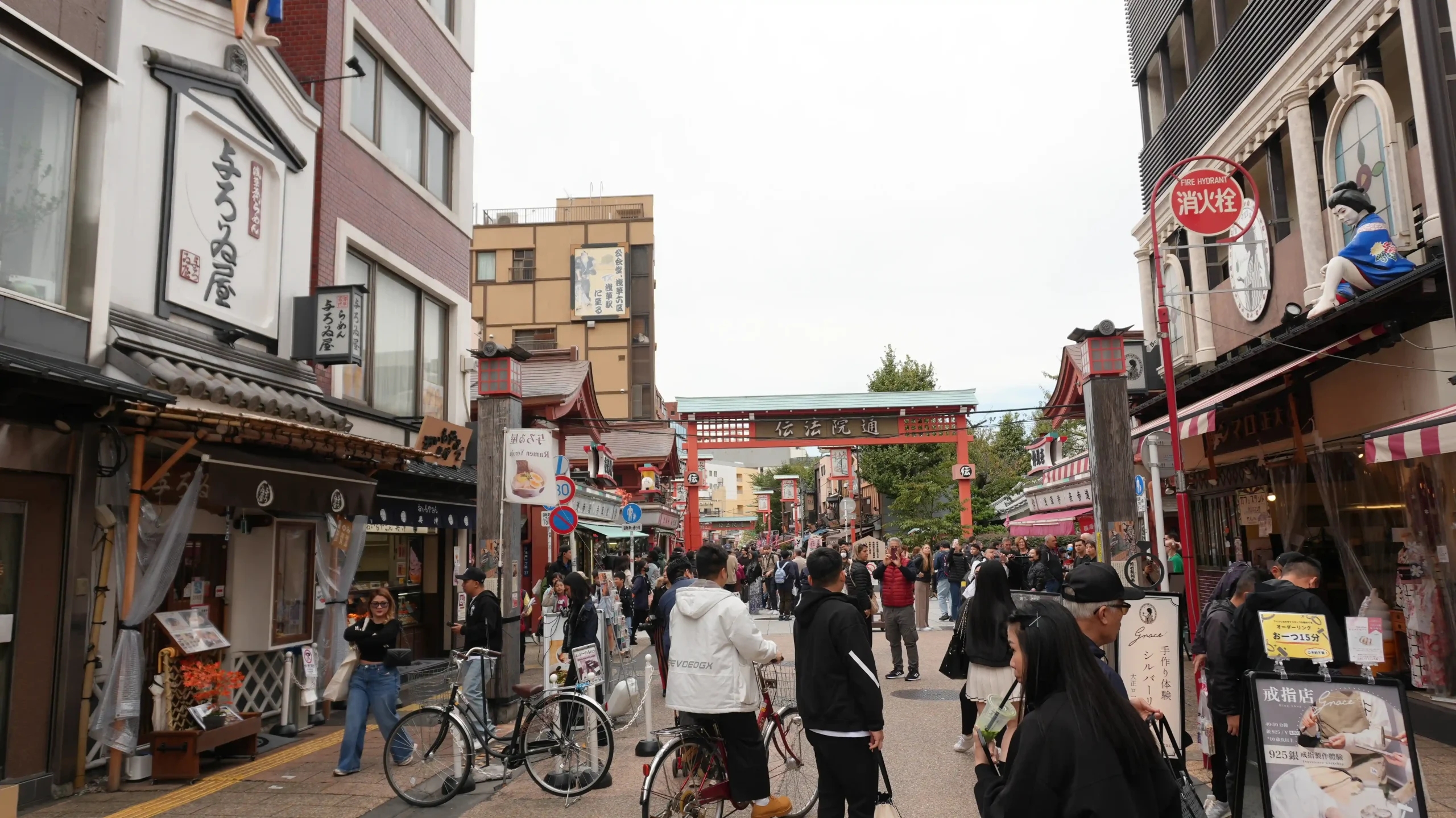
Sensoji Temple

Sensoji Temple, 浅草寺
A temple shaped by generations of saintly sacrifice, blending modern design with stories of faith and heritage.

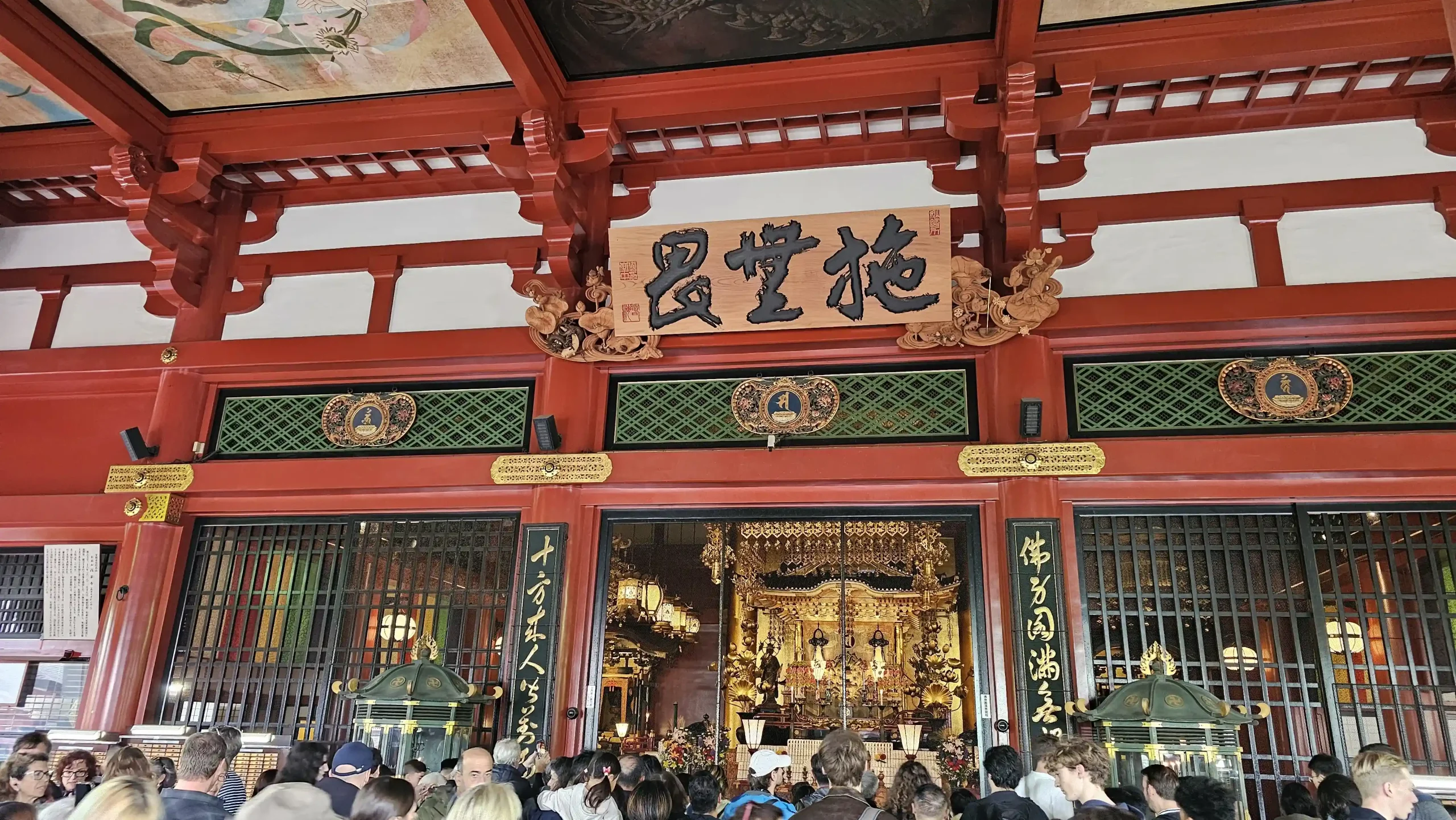
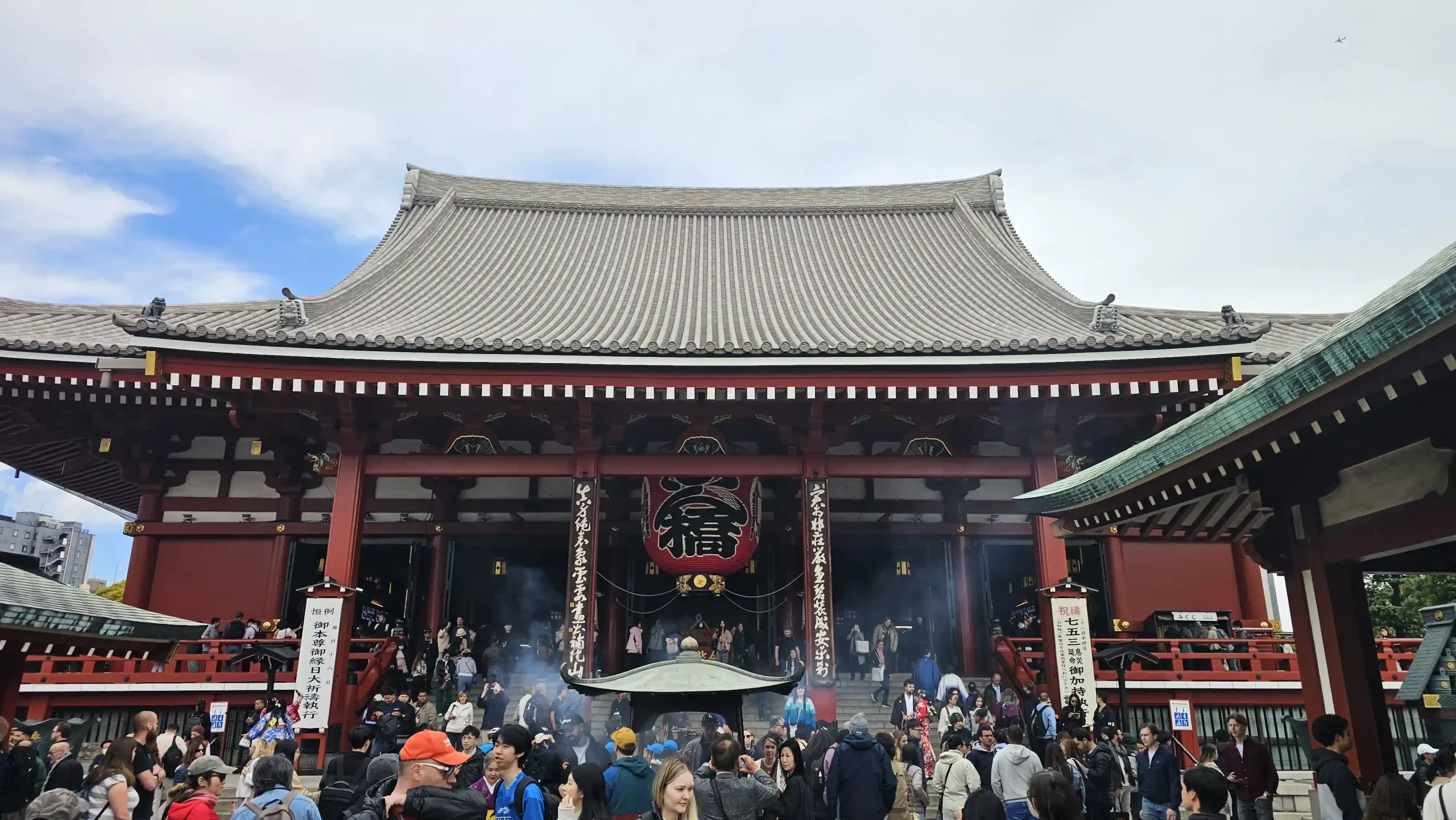
Main Hall (Kannondo Hall)
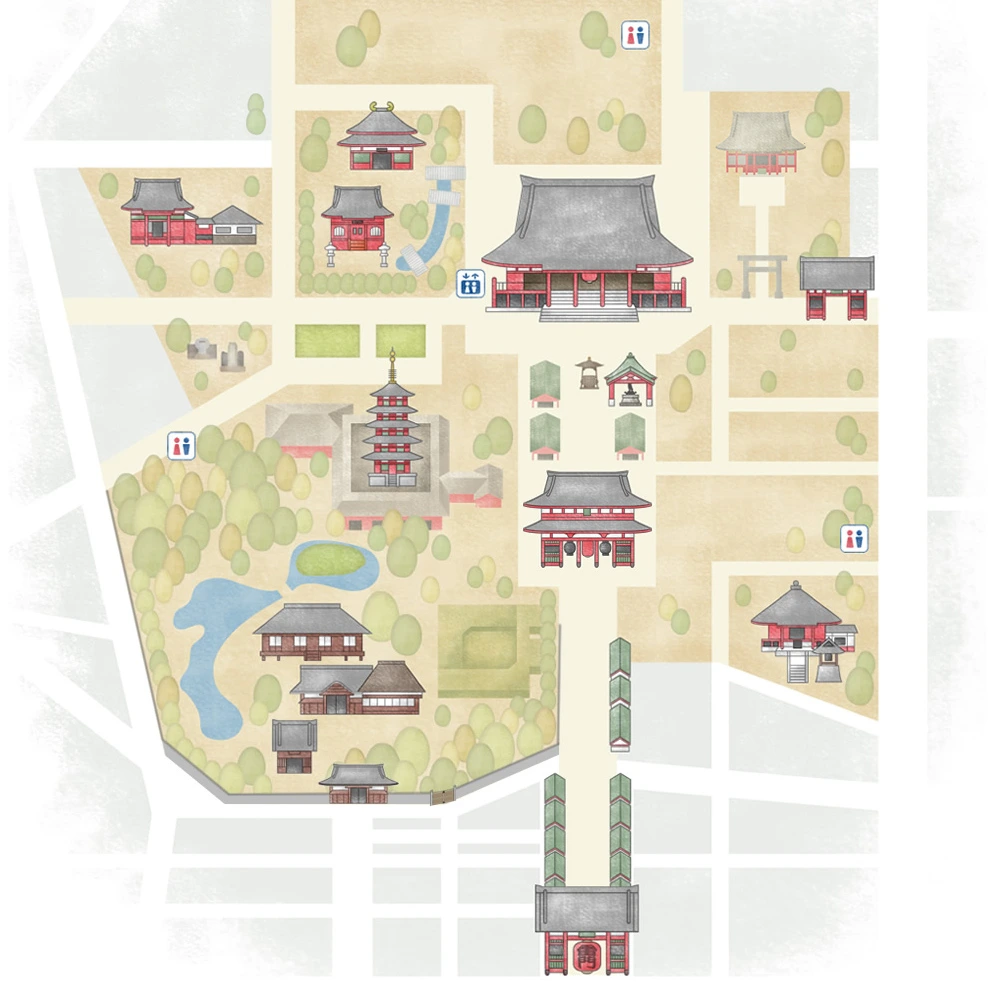
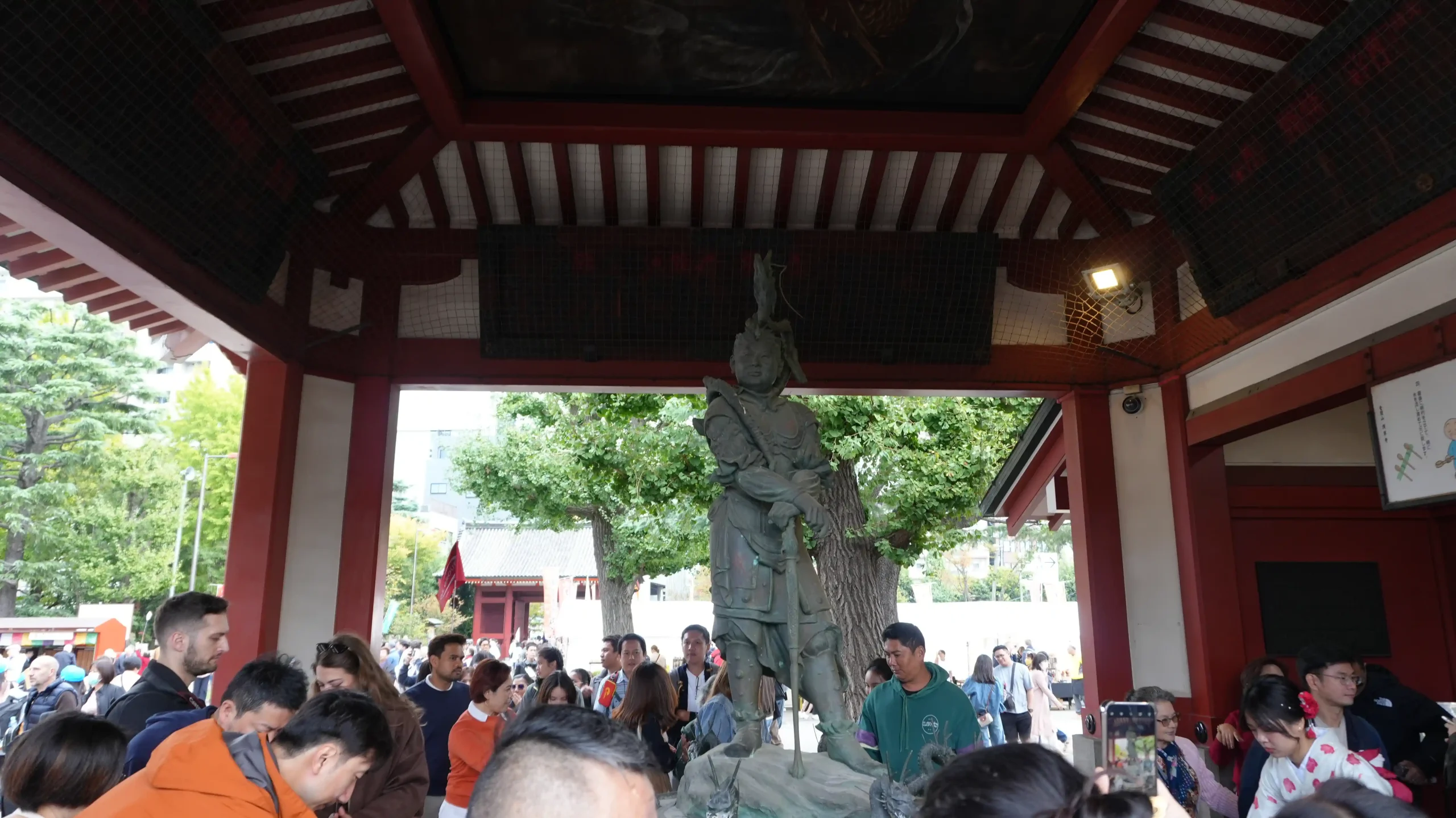
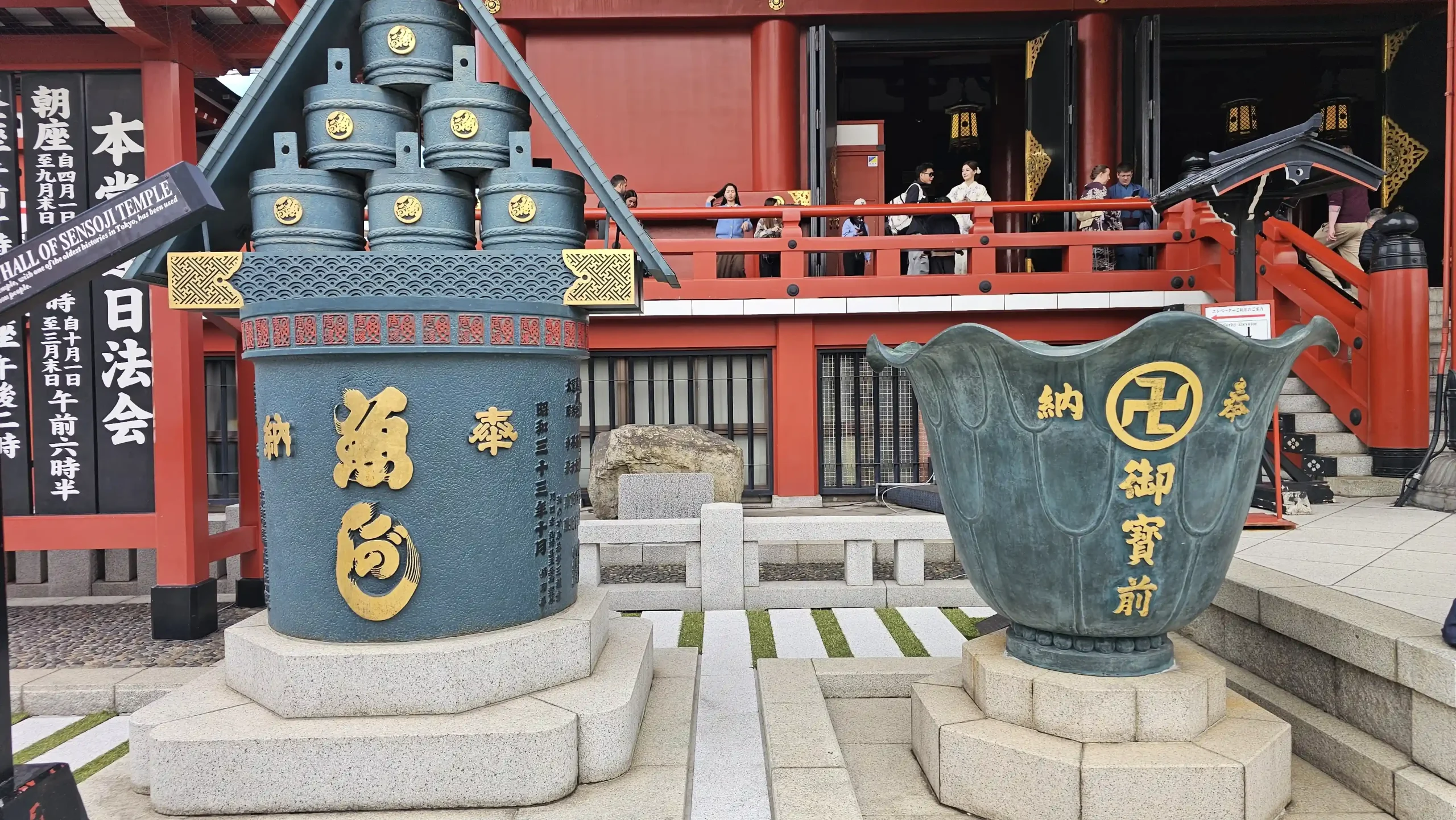
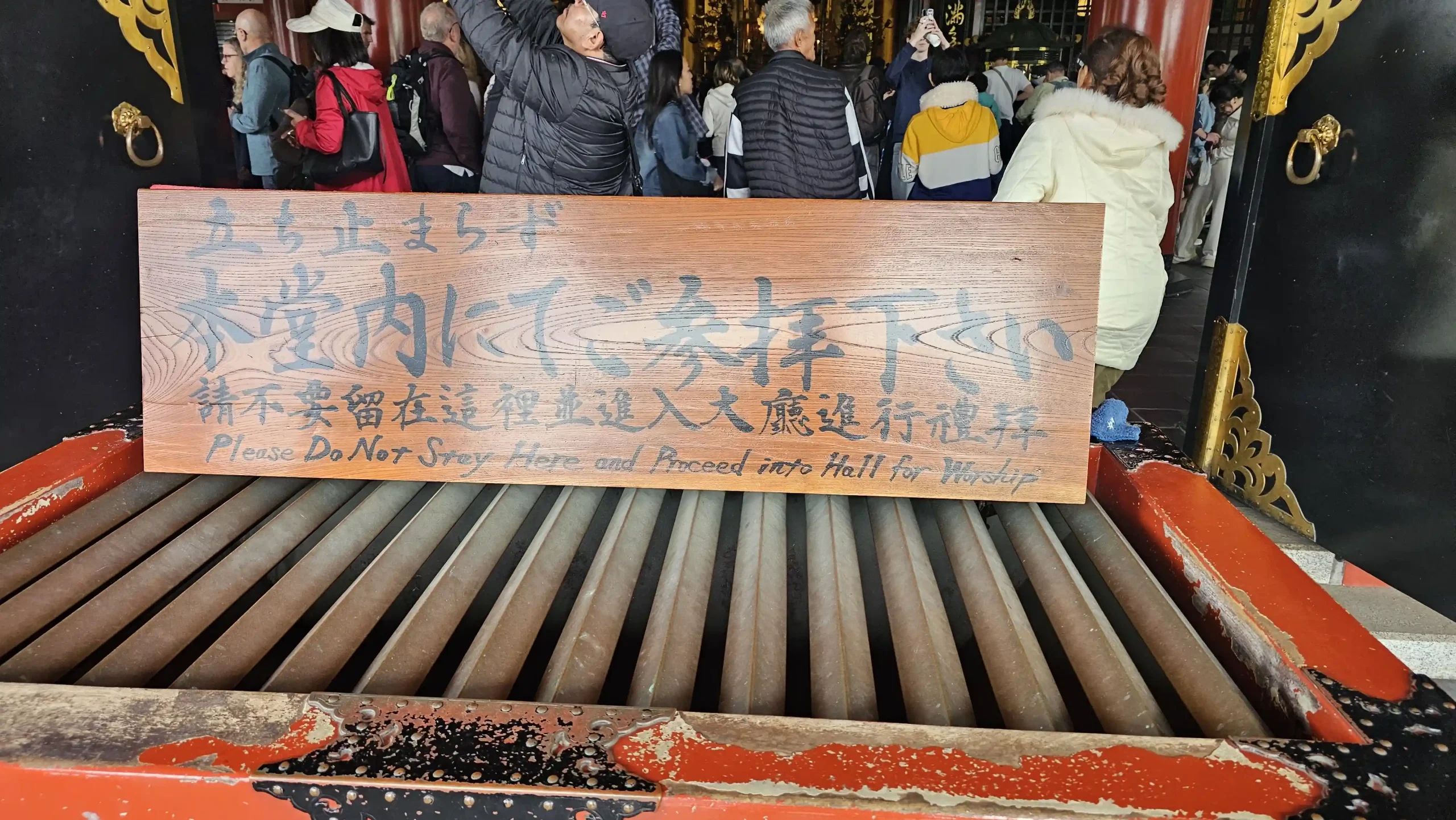
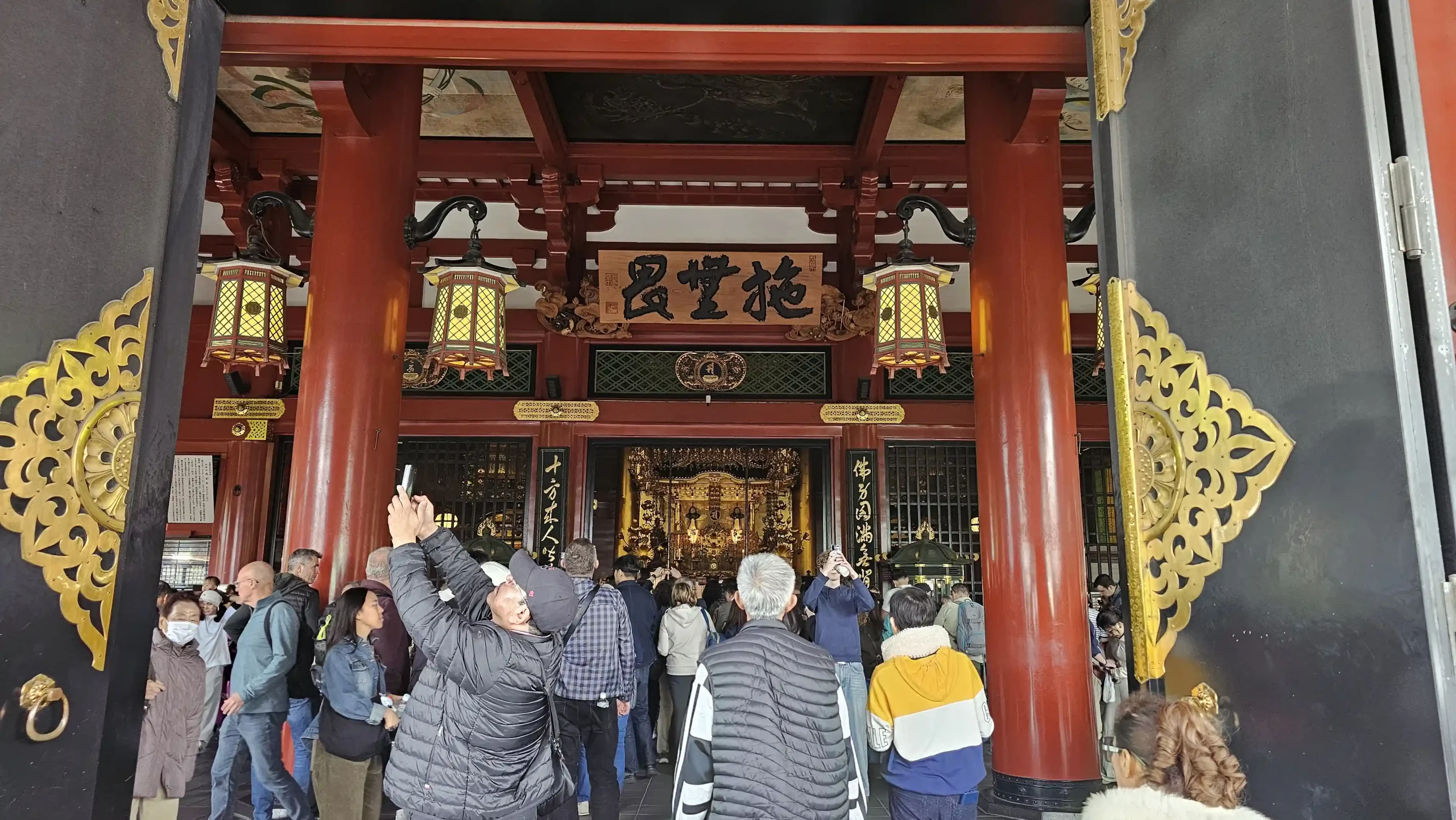
Built by the 3rd Tokugawa shogun, Tokugawa Iemitsu, and designated a national treasure, the Main Hall was destroyed in the Great Tokyo Air Raid on March 10, 1945. It was rebuilt in 1958 with donations from followers all over Japan. The immediately apparent characteristic of the Main Hall is its dramatically sloping roof that is quite tall compared to that of other temples. This hall is divided into the naijin (inner sanctum) and the gejin (outer sanctum). Senso-ji’s principal image, the Bodhisattva Kannon, sits in a miniature temple in the middle of the naijin.

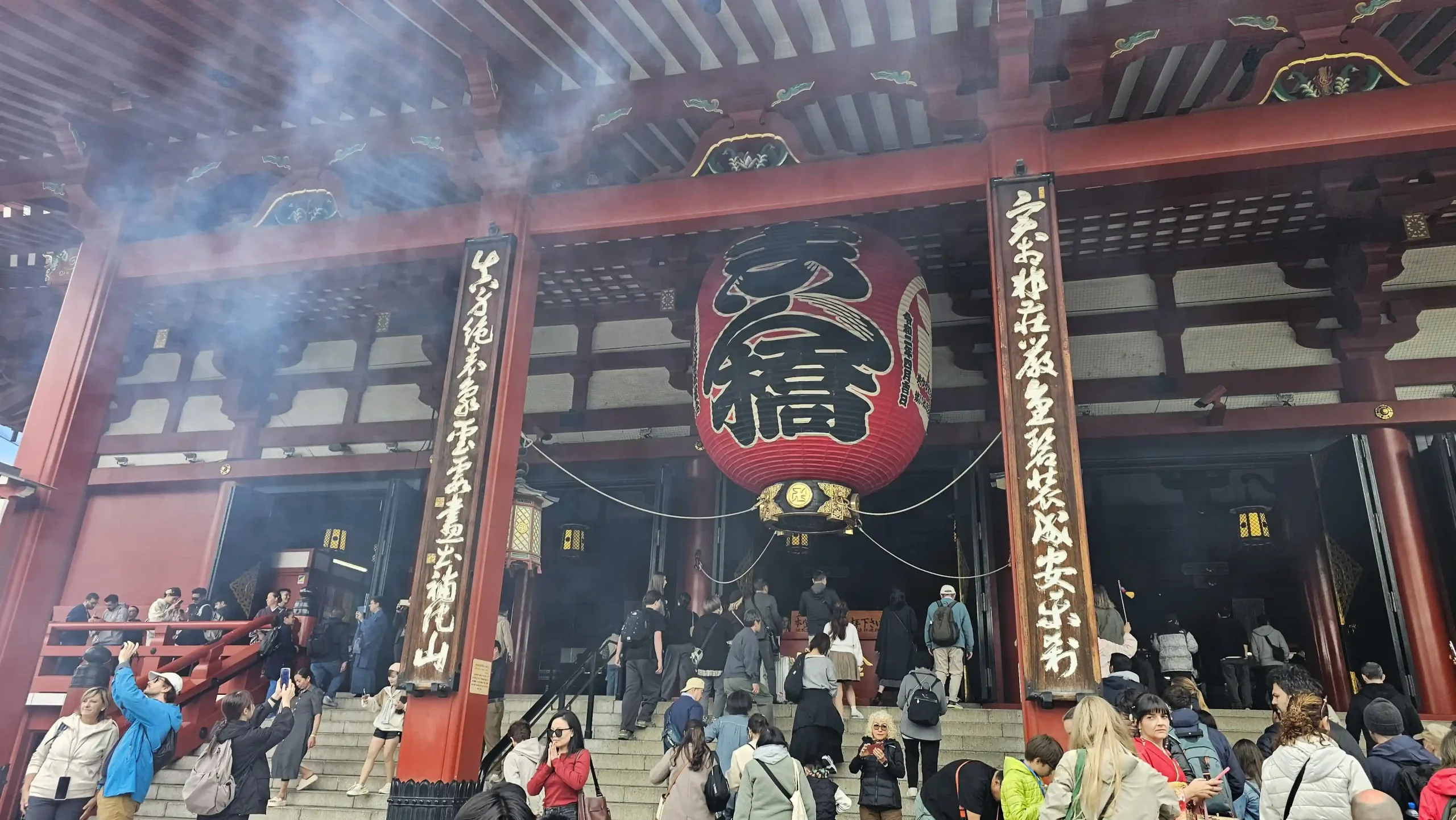
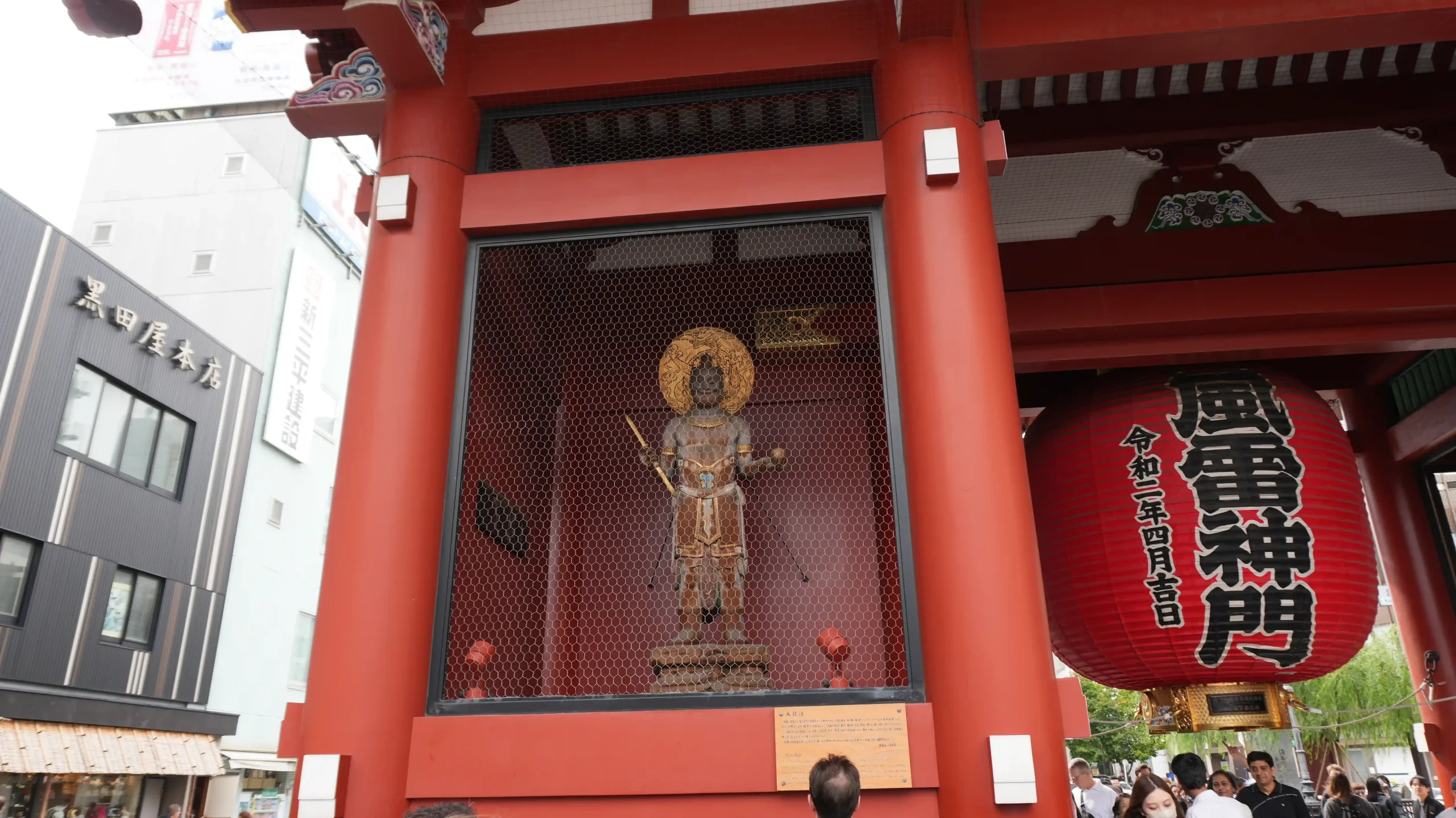
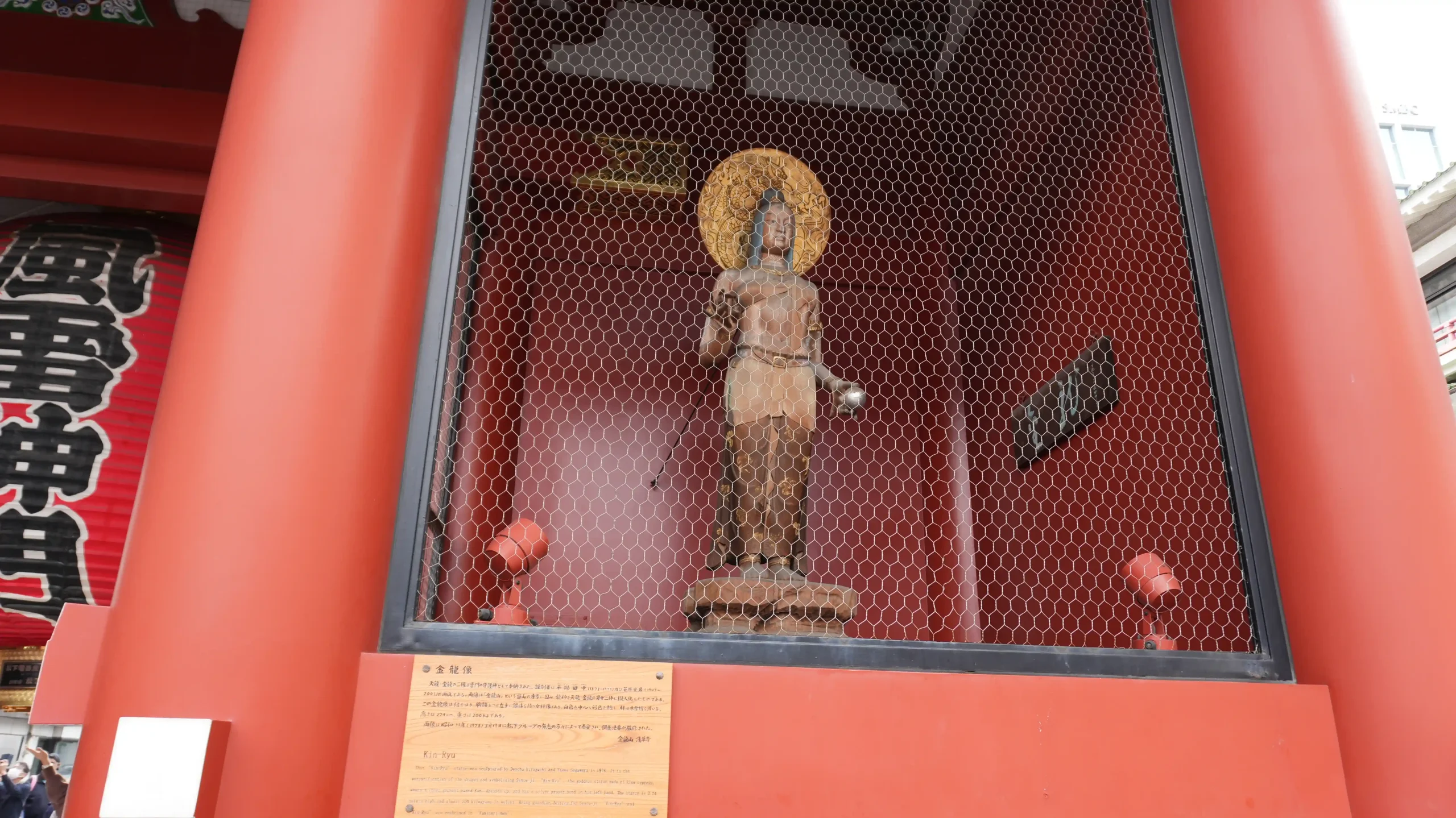
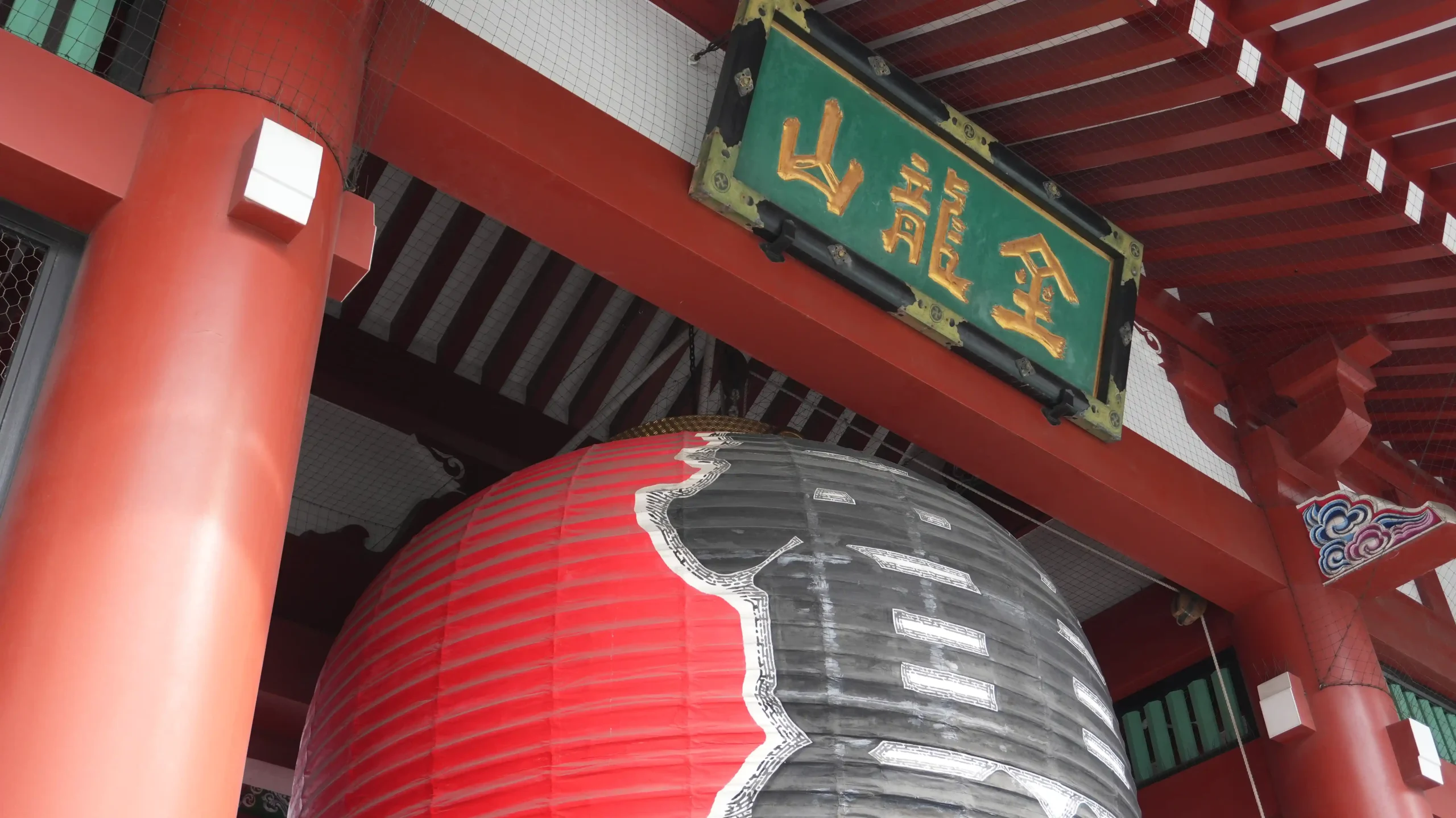
Kaminari-mon Gate (Furaijin-mon Gate)
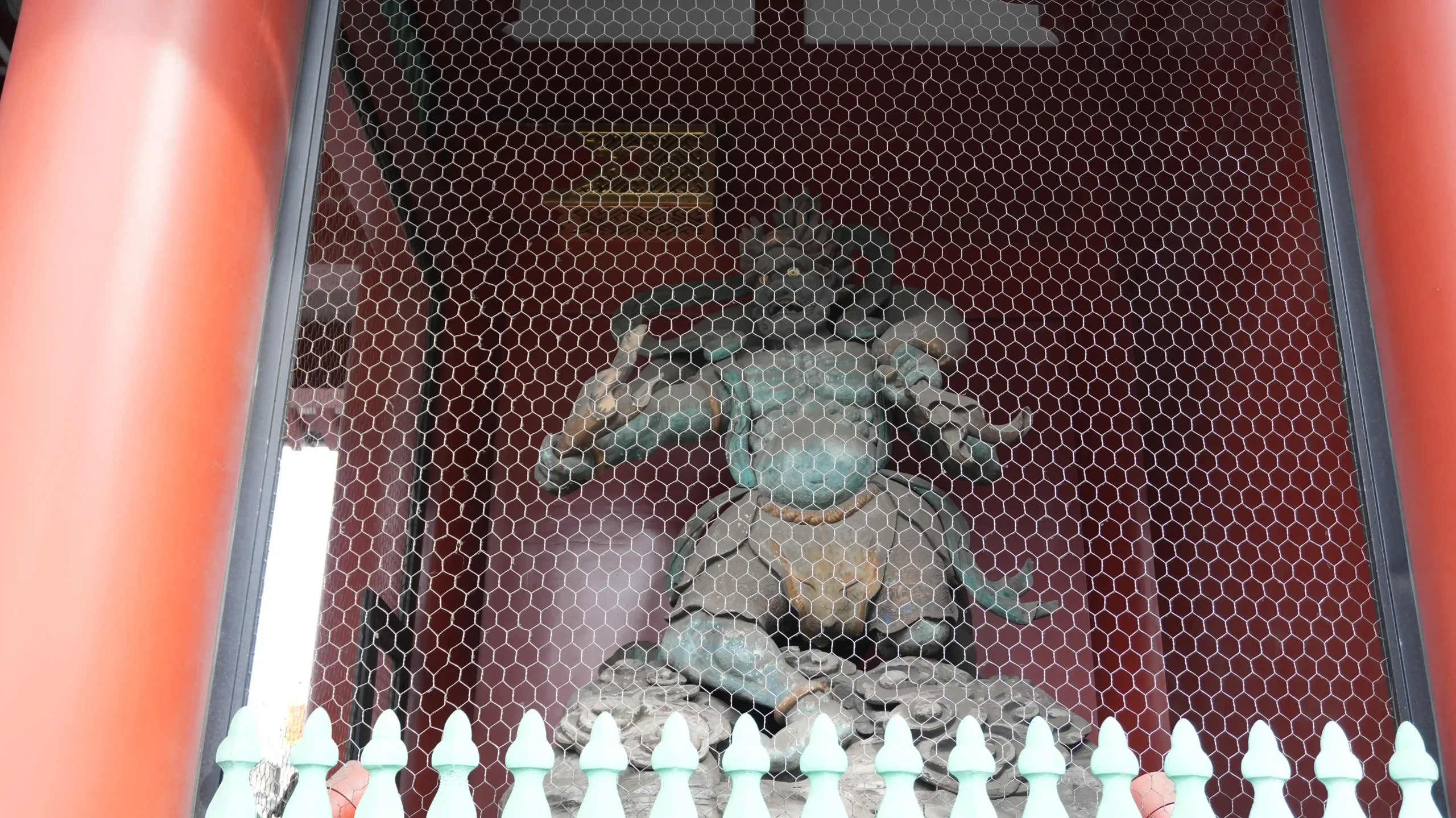
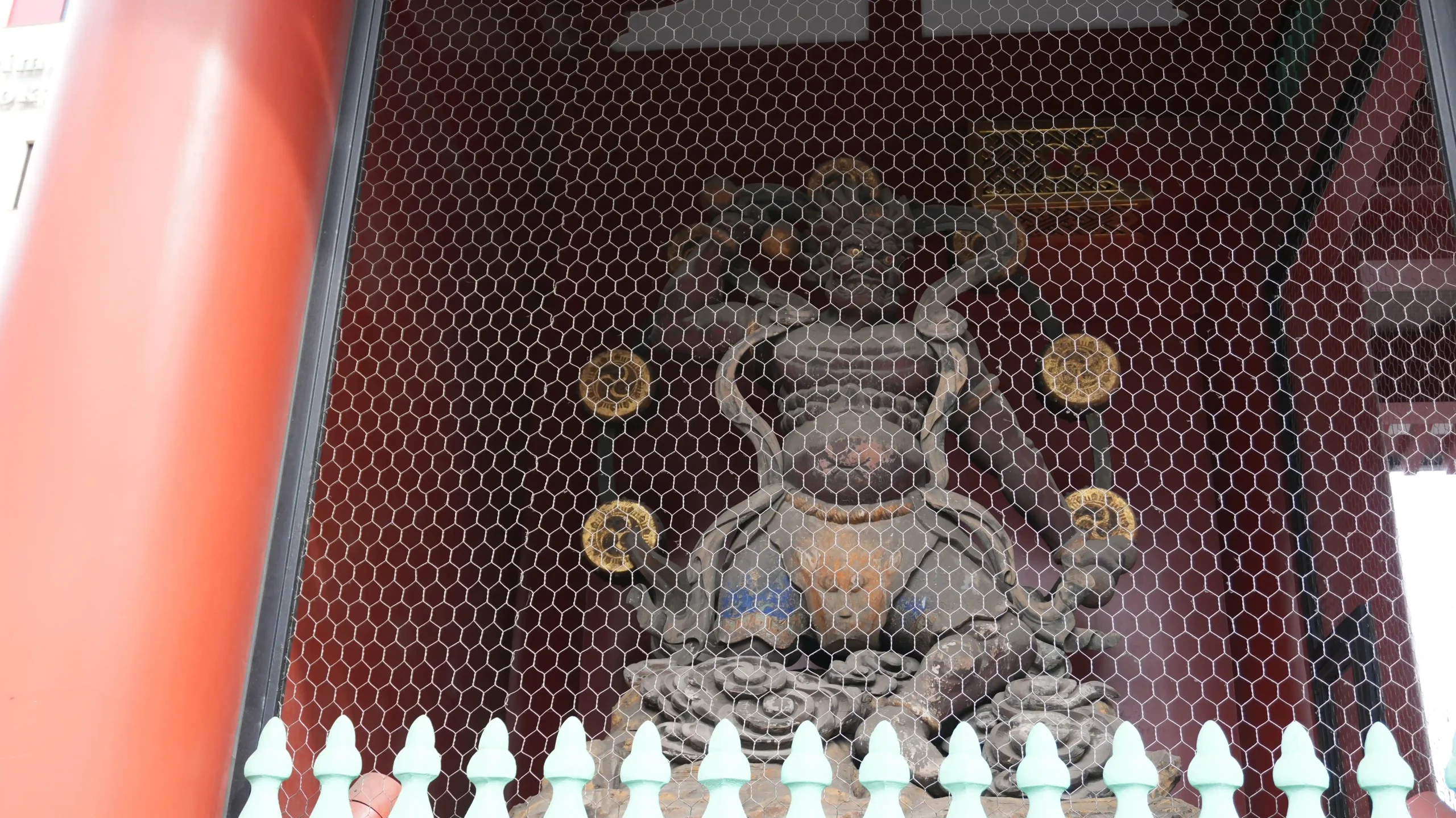
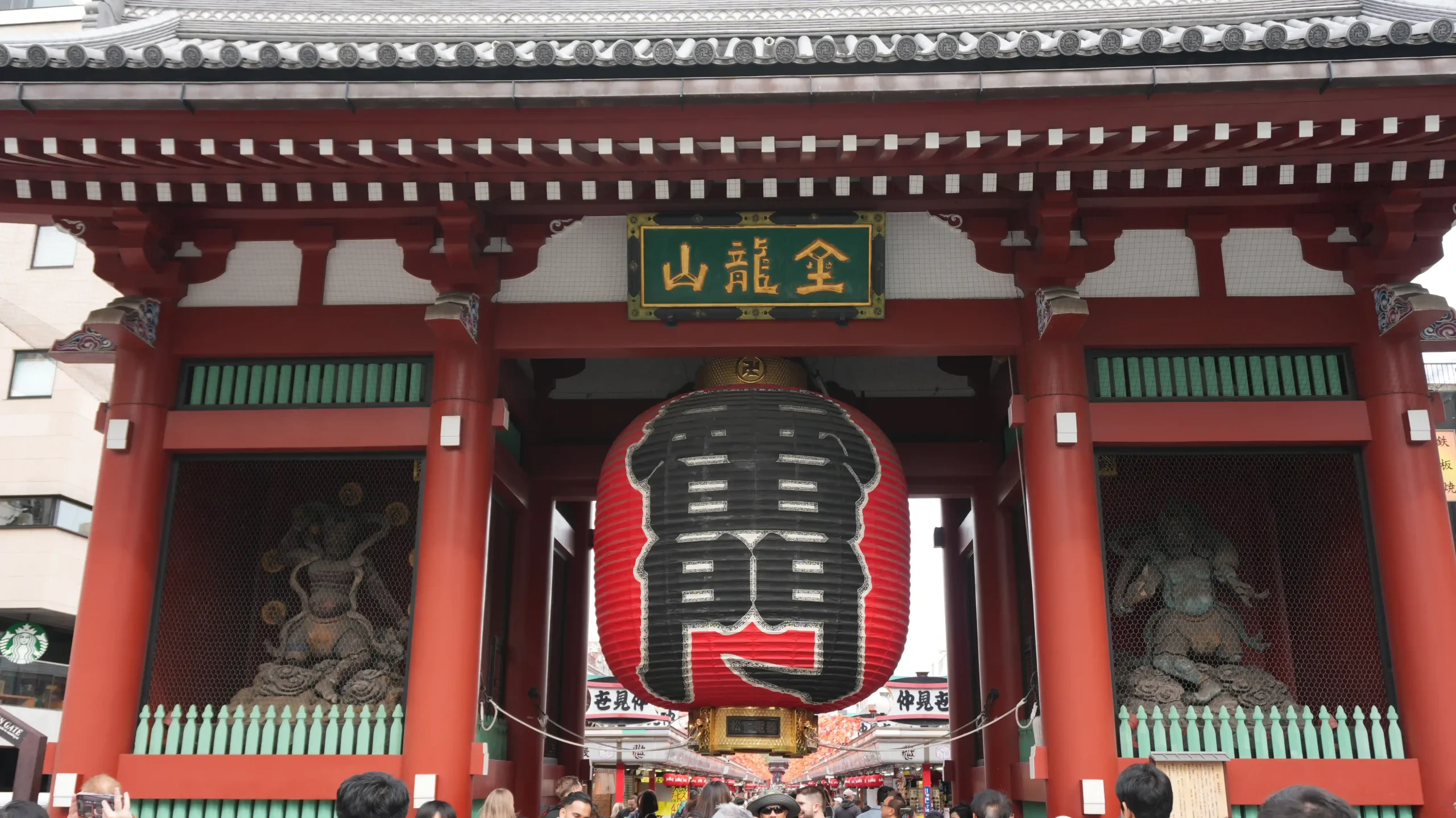
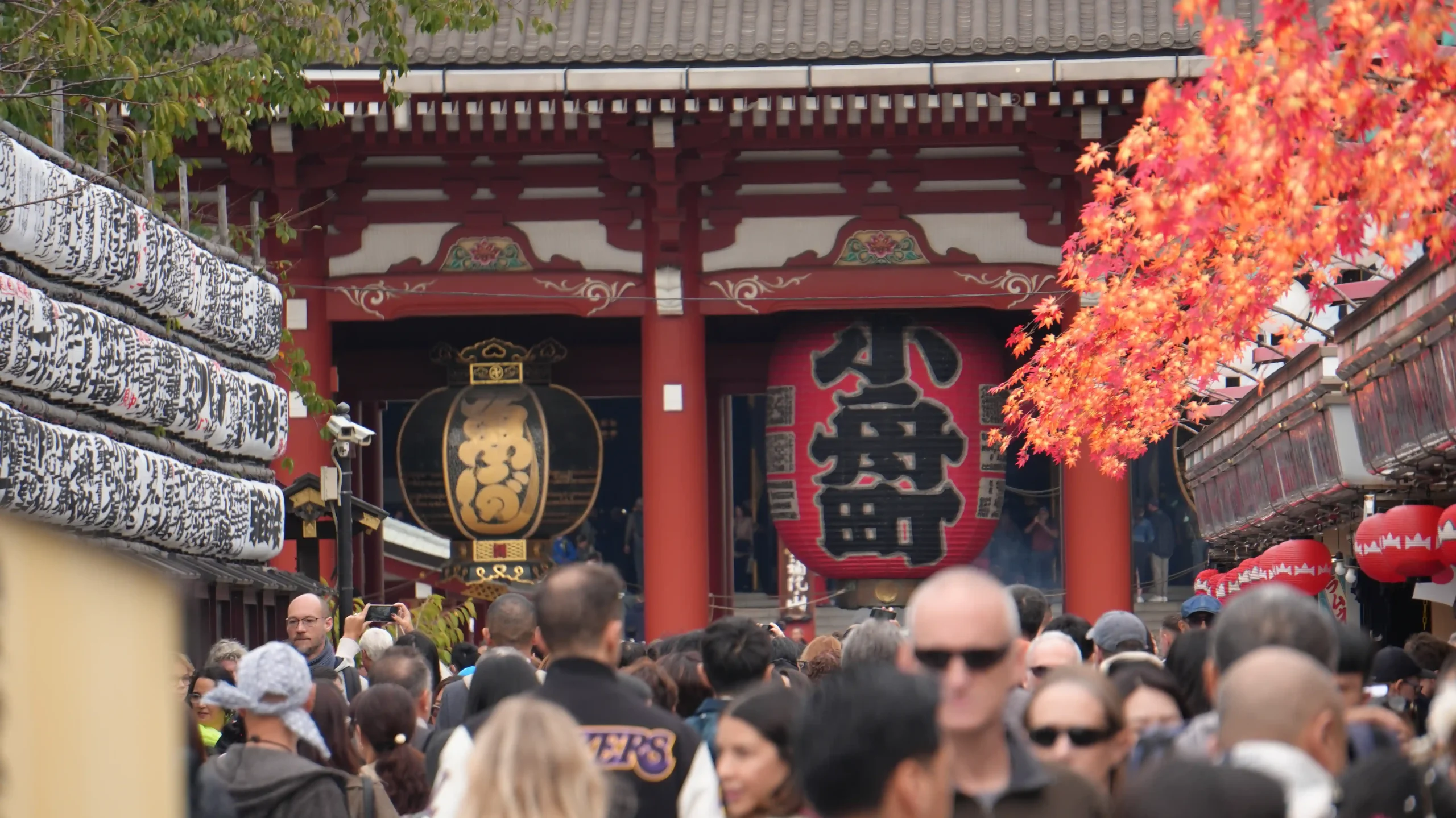
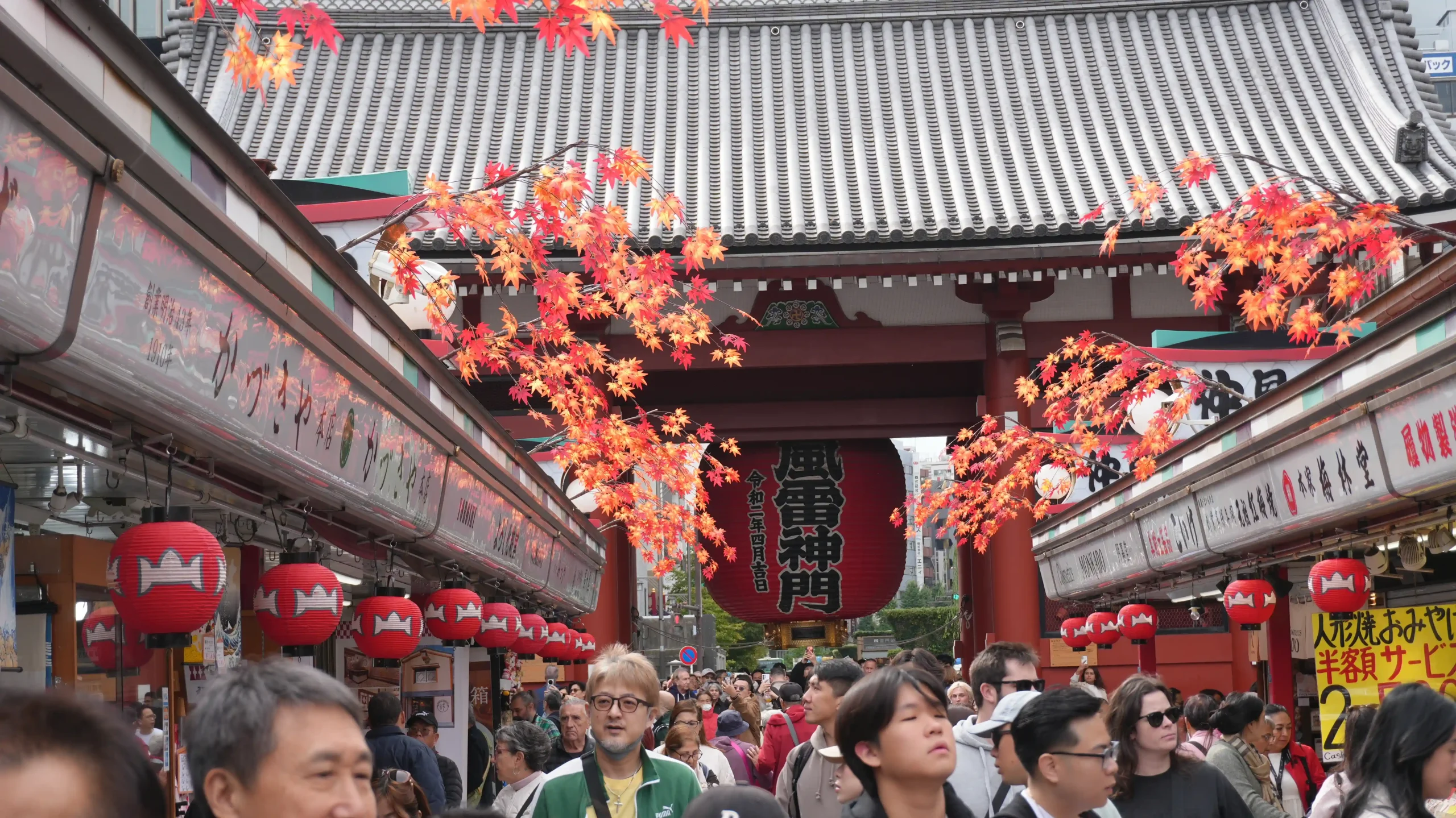
Originally built by the military commander Taira no Kinmasa in 942, Kaminari-mon Gate is the main gate of Senso-ji. Statues of Fujin (the god of wind) and Raijin (the god of thunder) were enshrined here to guard the temple from natural disasters. The gate was burned down in a massive fire that had broken out in neighboring Tawaramachi in December 1865. 95years later,the current gate was rebuilt with a donation by Konosuke Matsushita, founder of Matsushita Electric (currently Panasonic Corporation) in 1960.

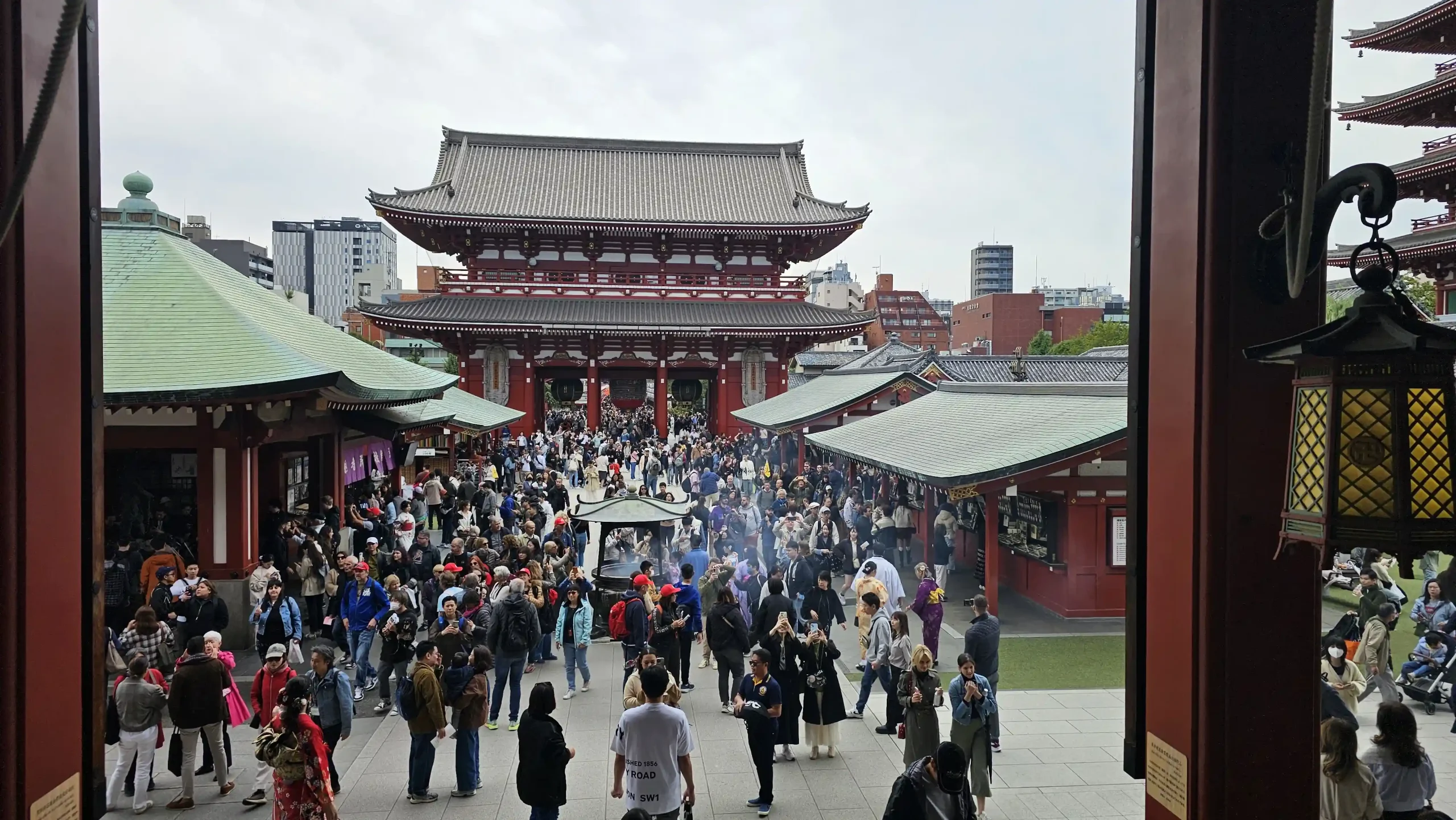
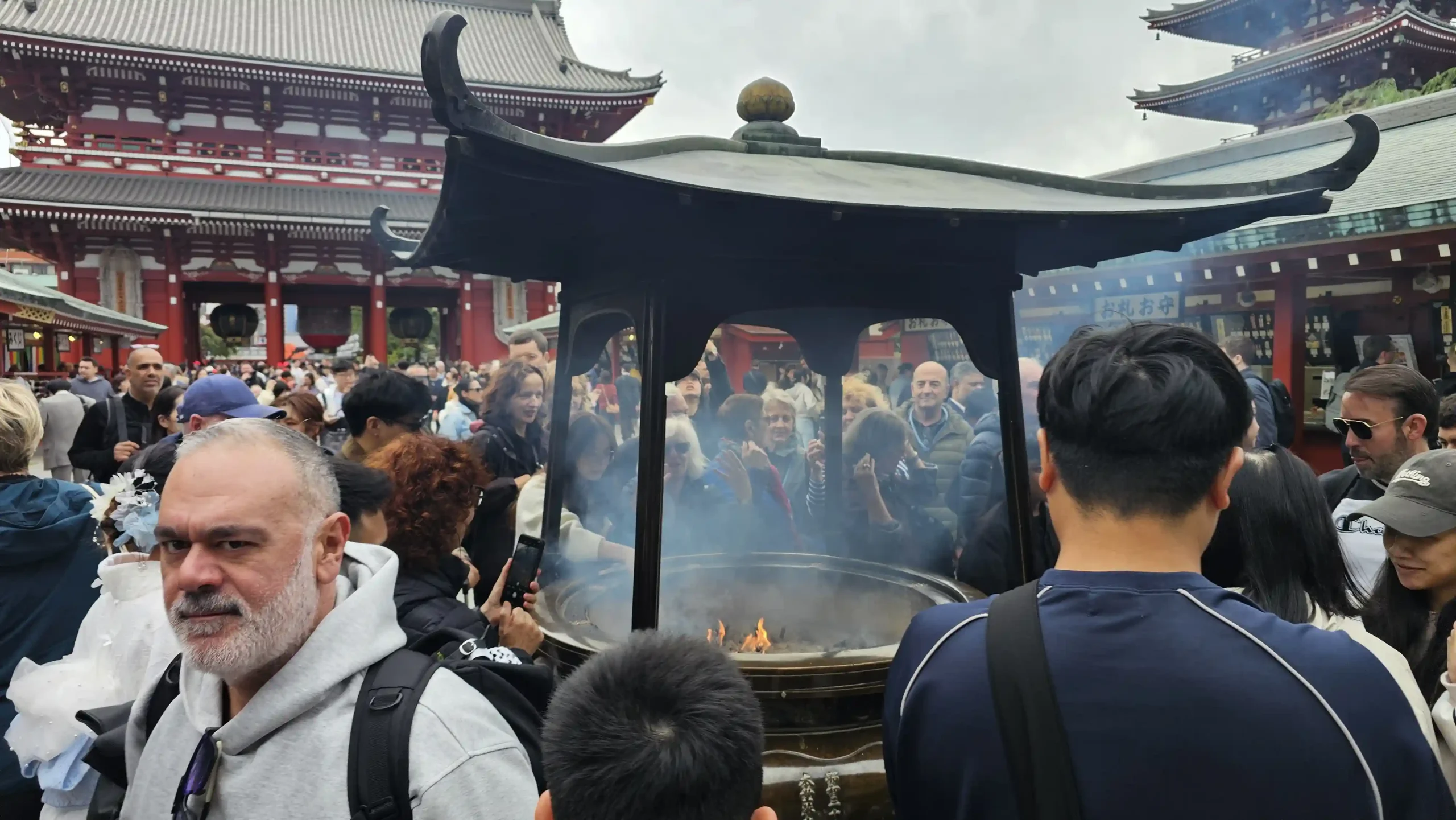
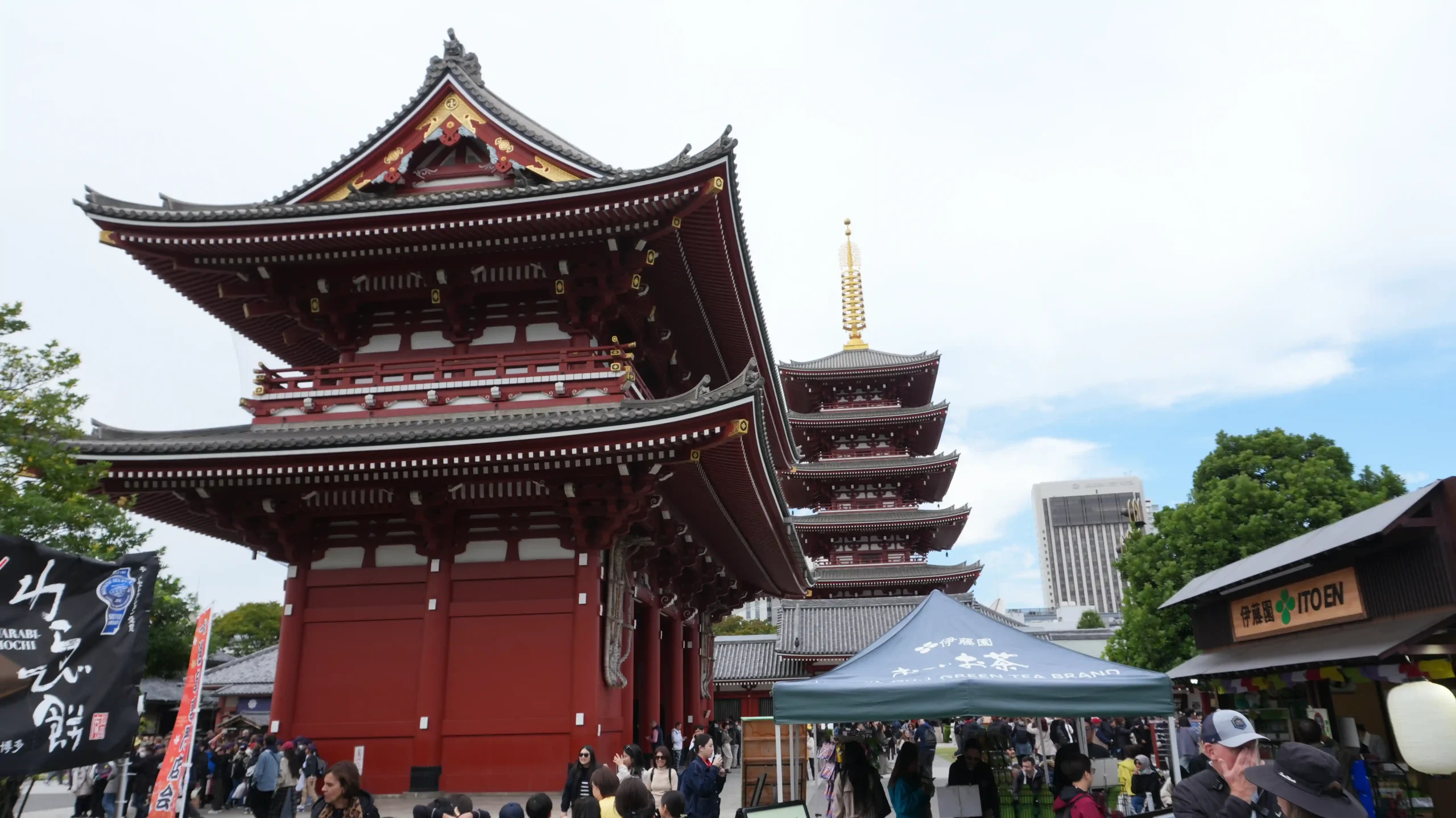
Hozo-mon Gate (Nio-mon Gate)
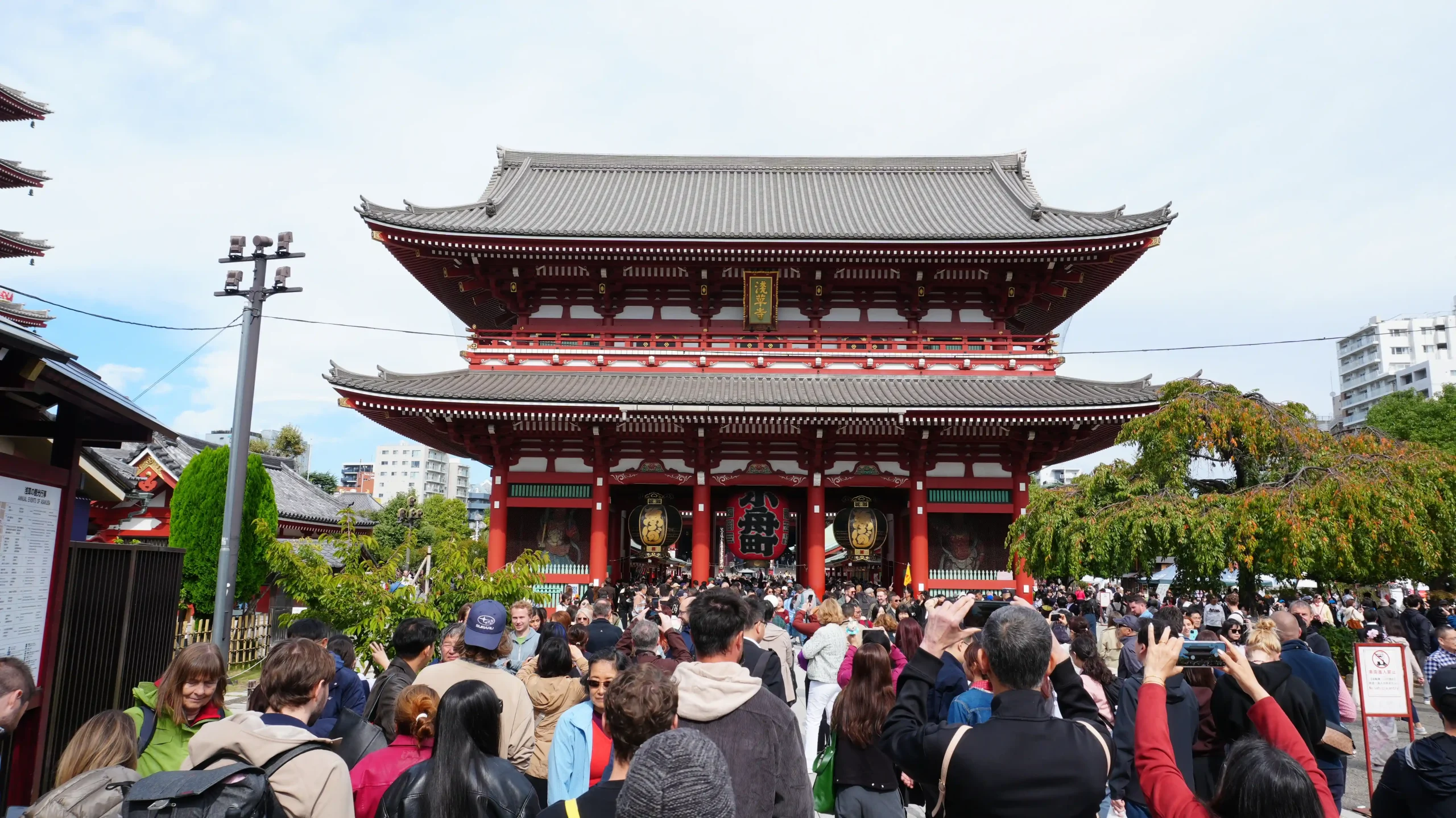
The original Hozo-mon Gate was built in 942 by the military commander Taira no Kinmasa. Tokugawa Iemitsu, the 3rd shogun of the Tokugawa Dynasty, advanced construction of the temple complex, and a new gate was installed in 1649. The current gate was rebuilt in 1964 with a donation by Yonetaro Otani, founder of Otani Heavy Industries and Hotel New Otani.
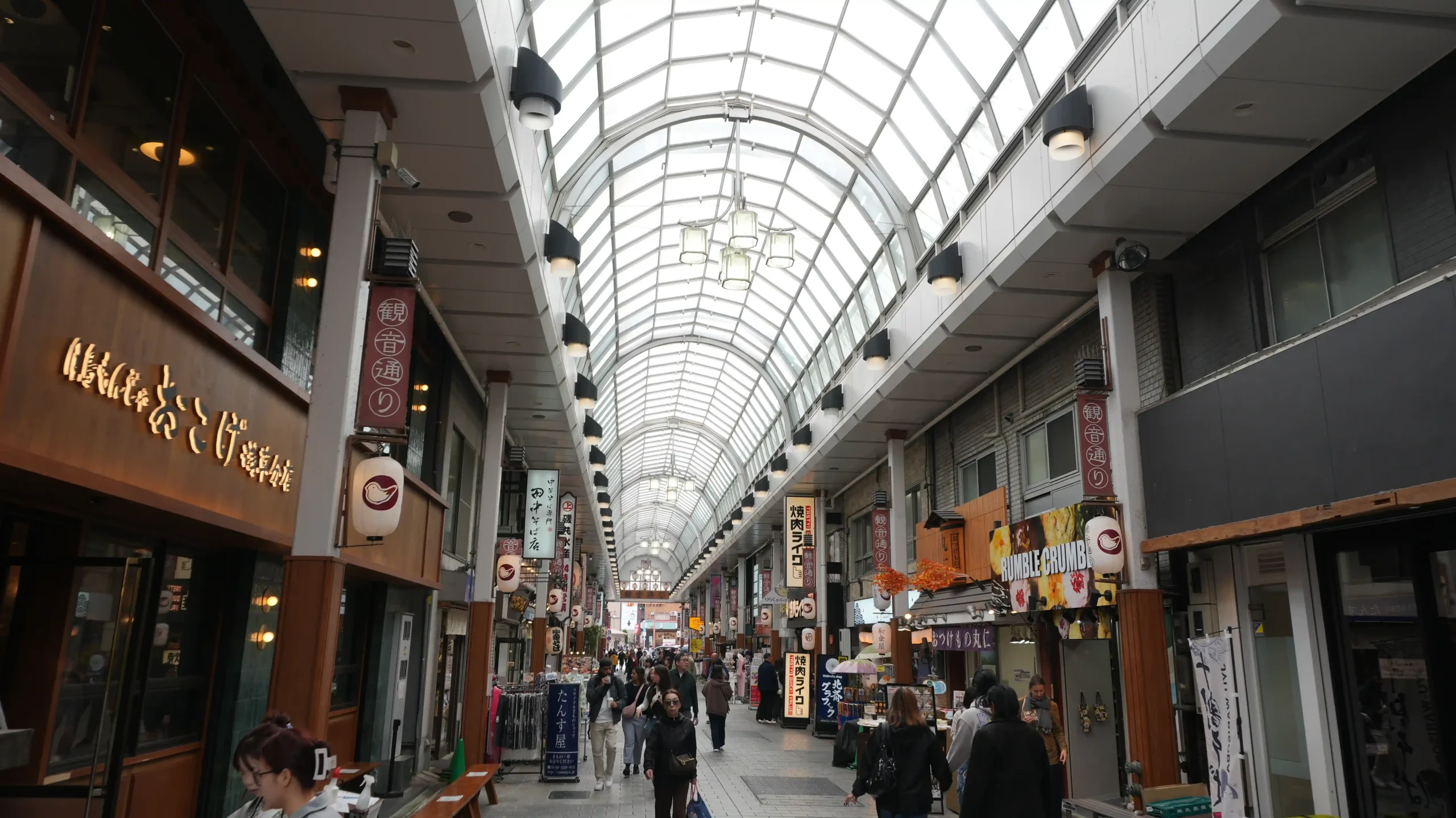
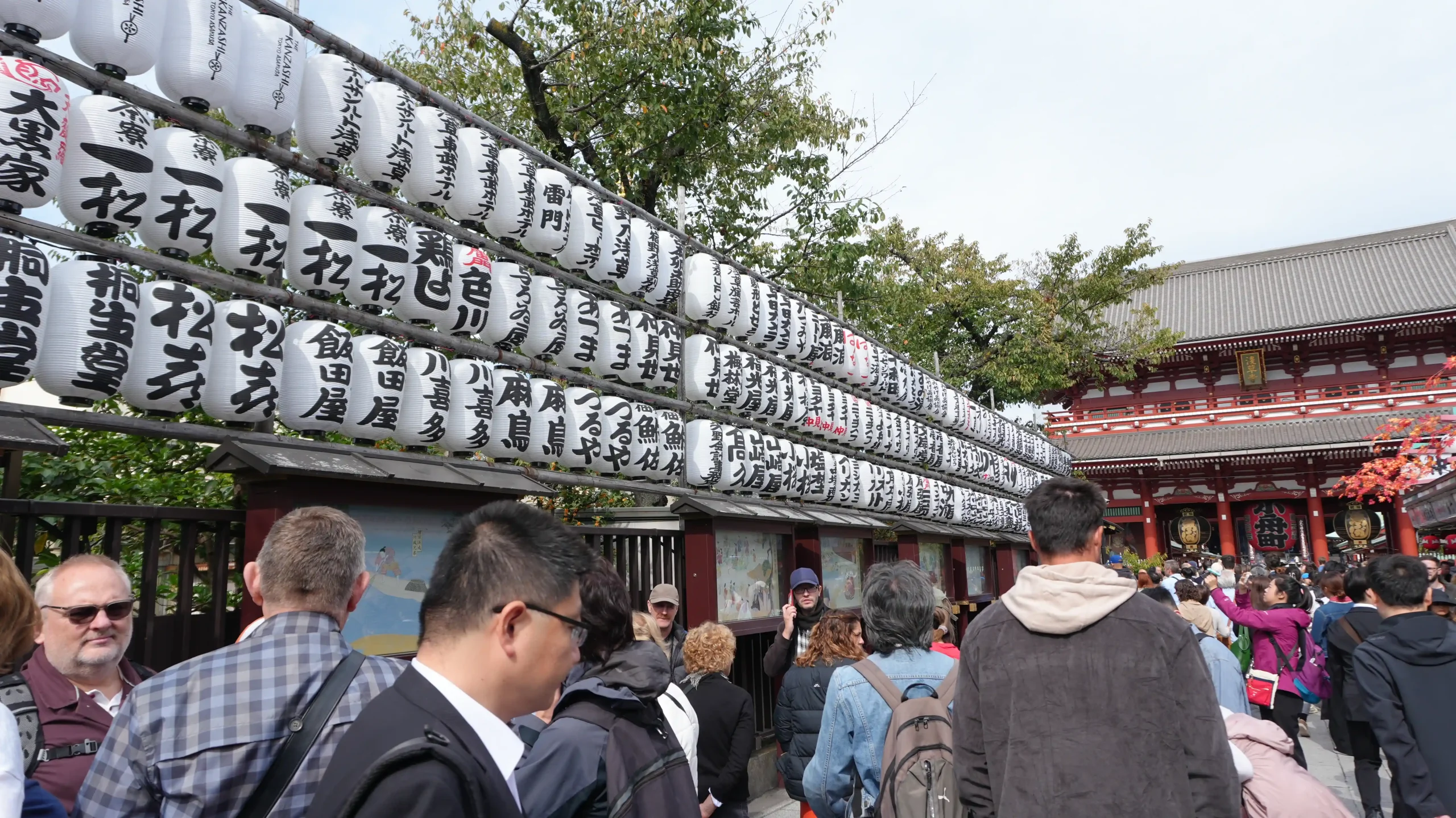
Nakamise Shopping Street
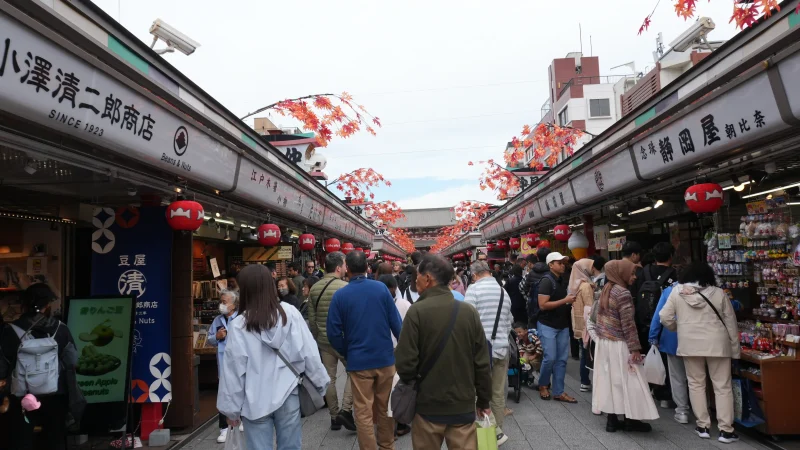
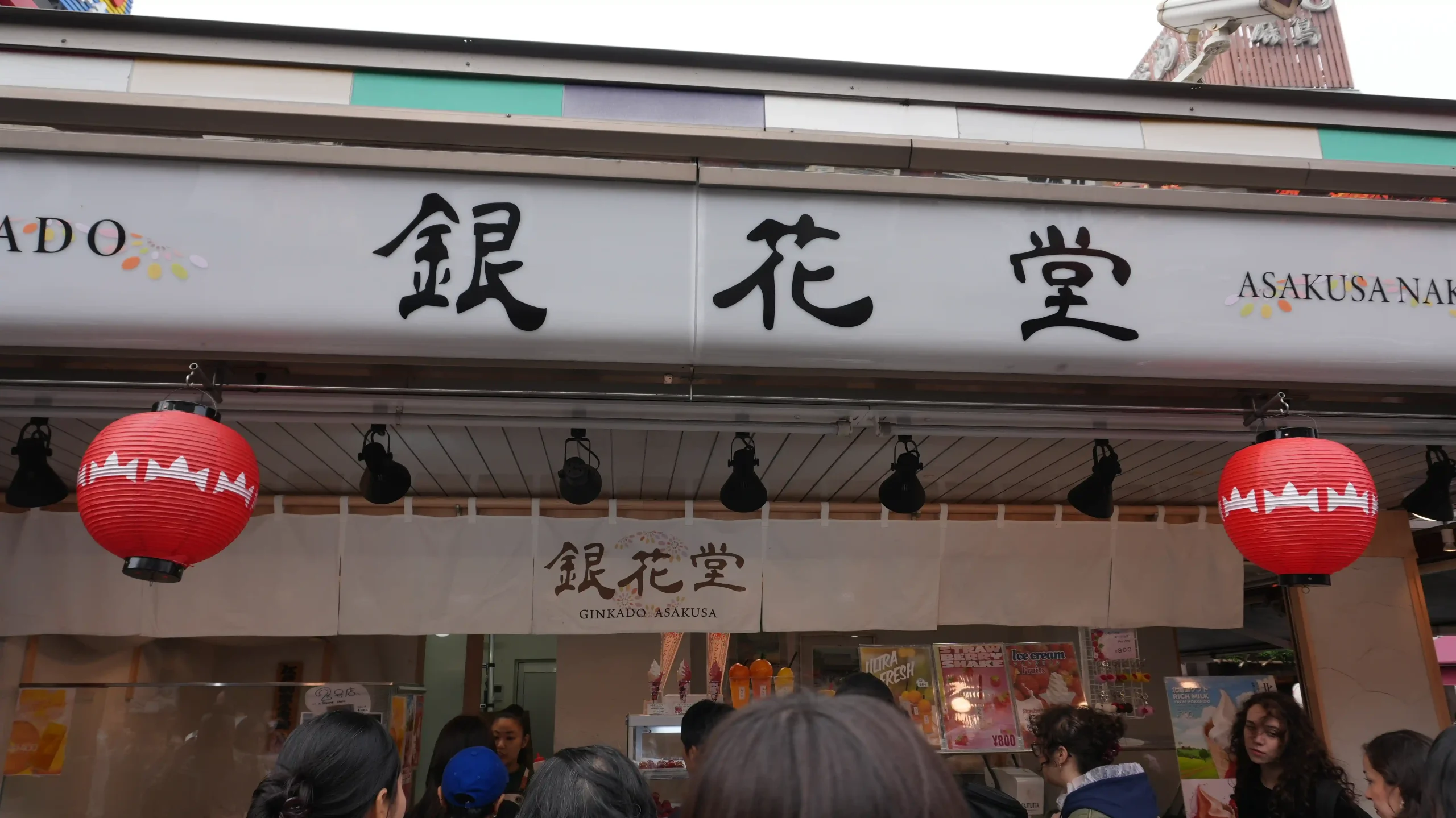
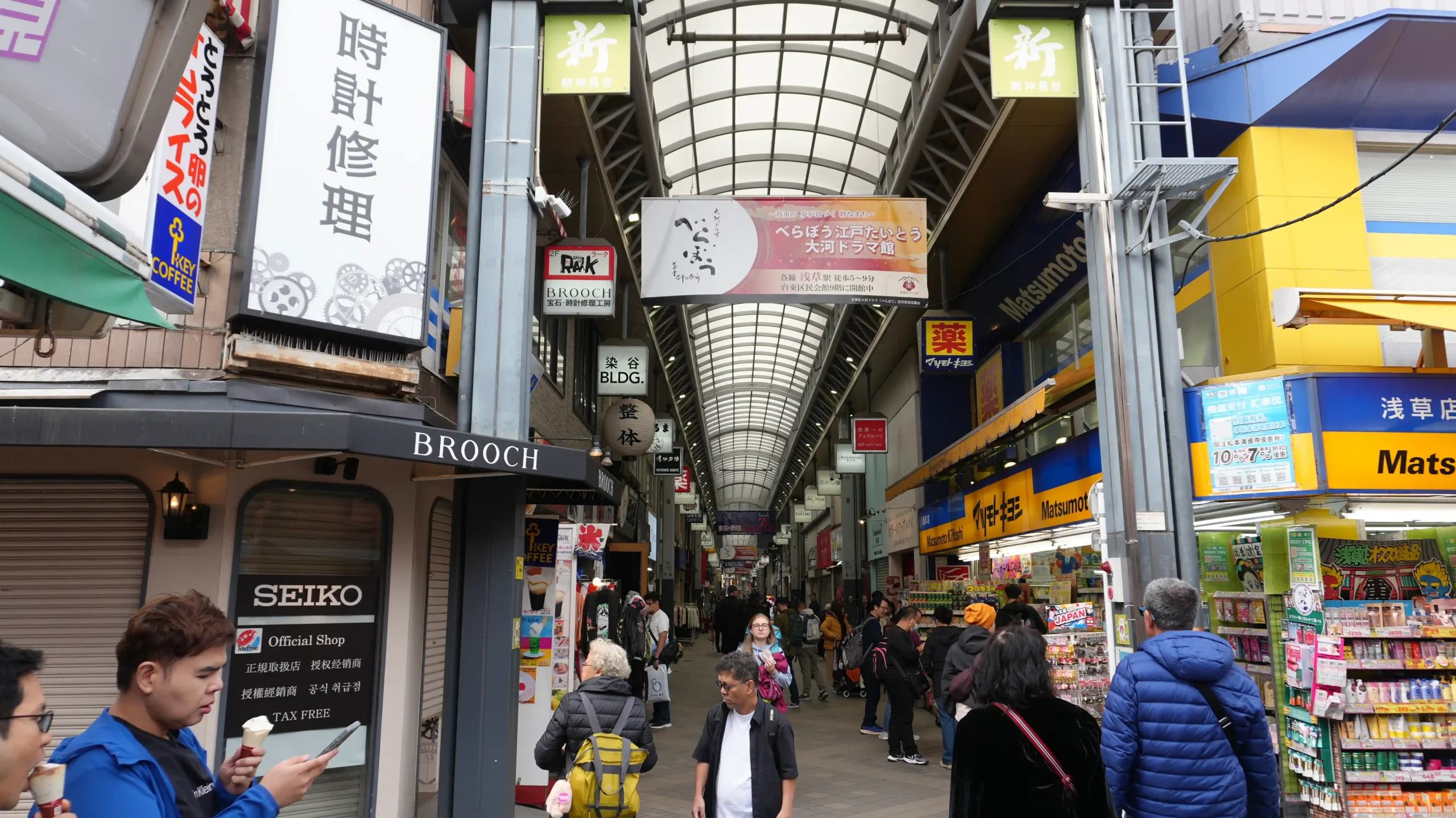
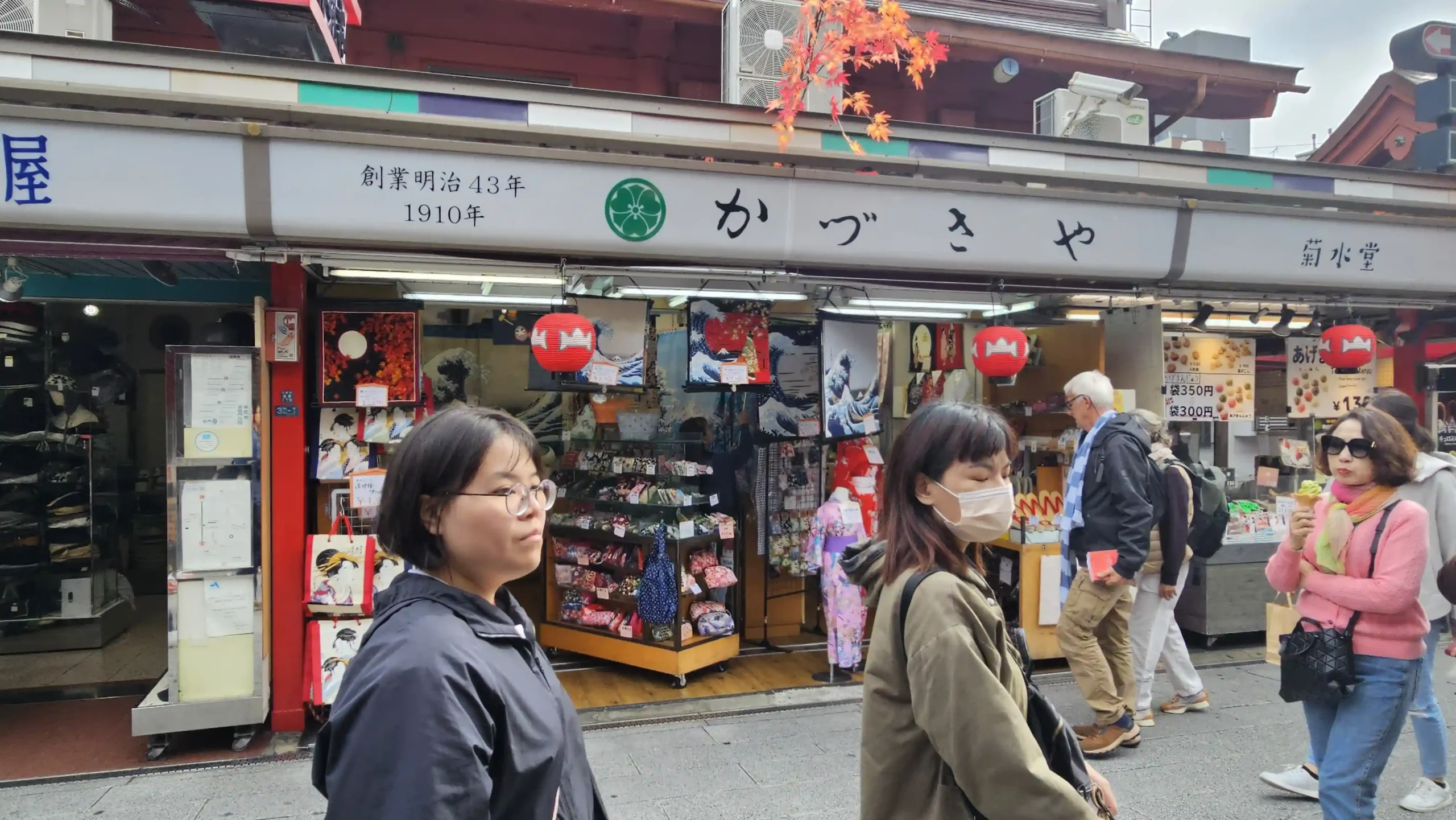
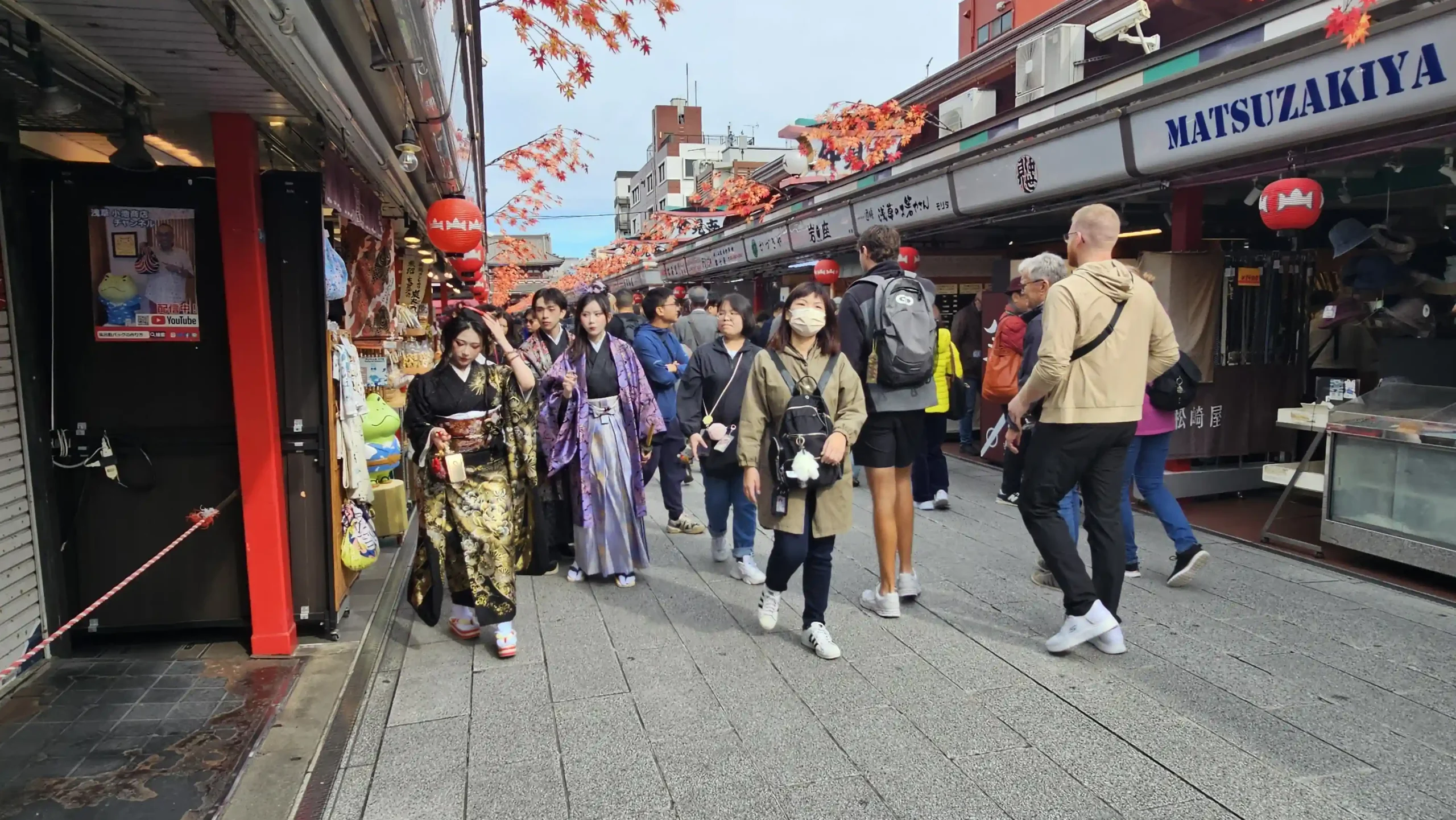
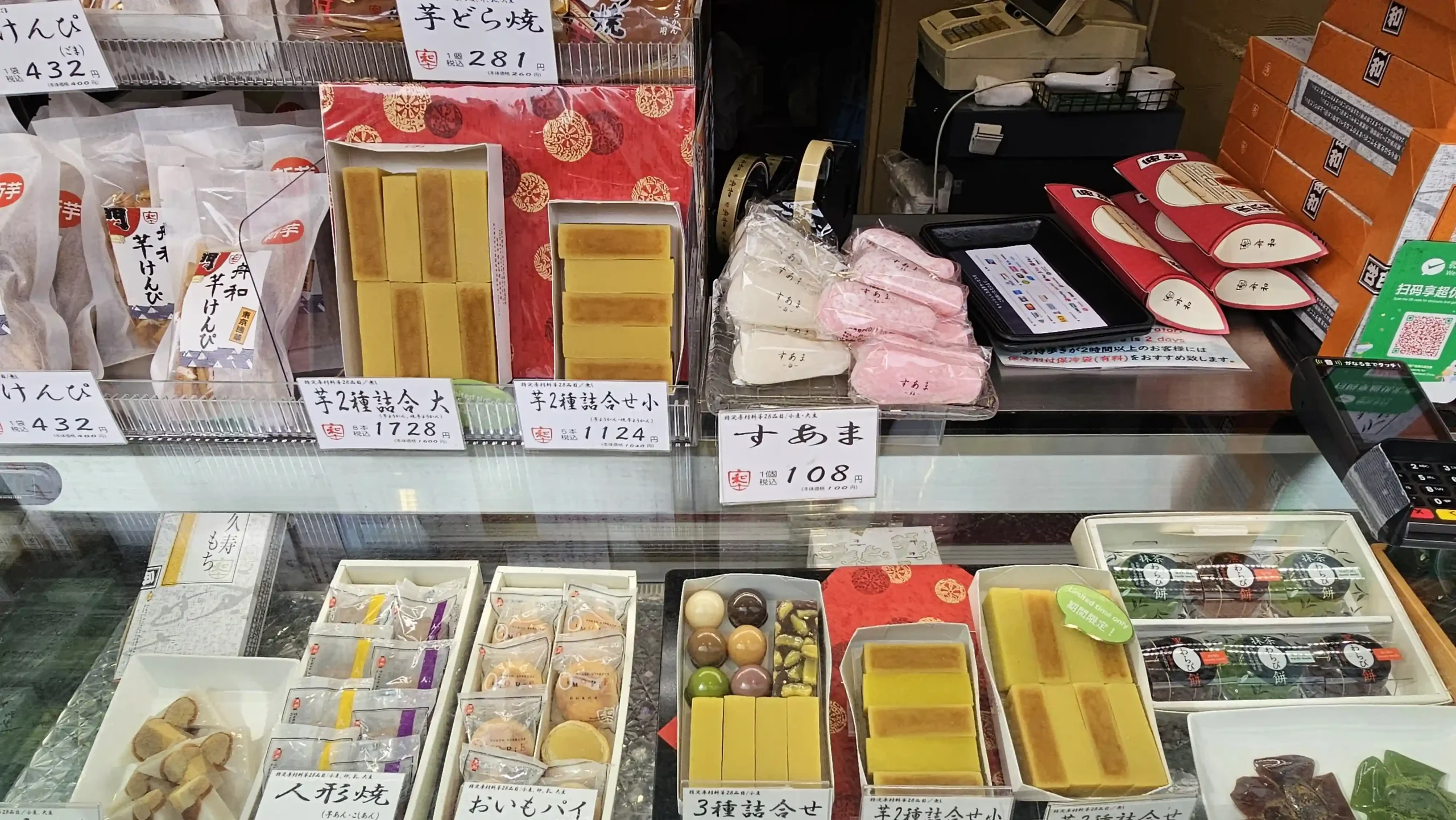
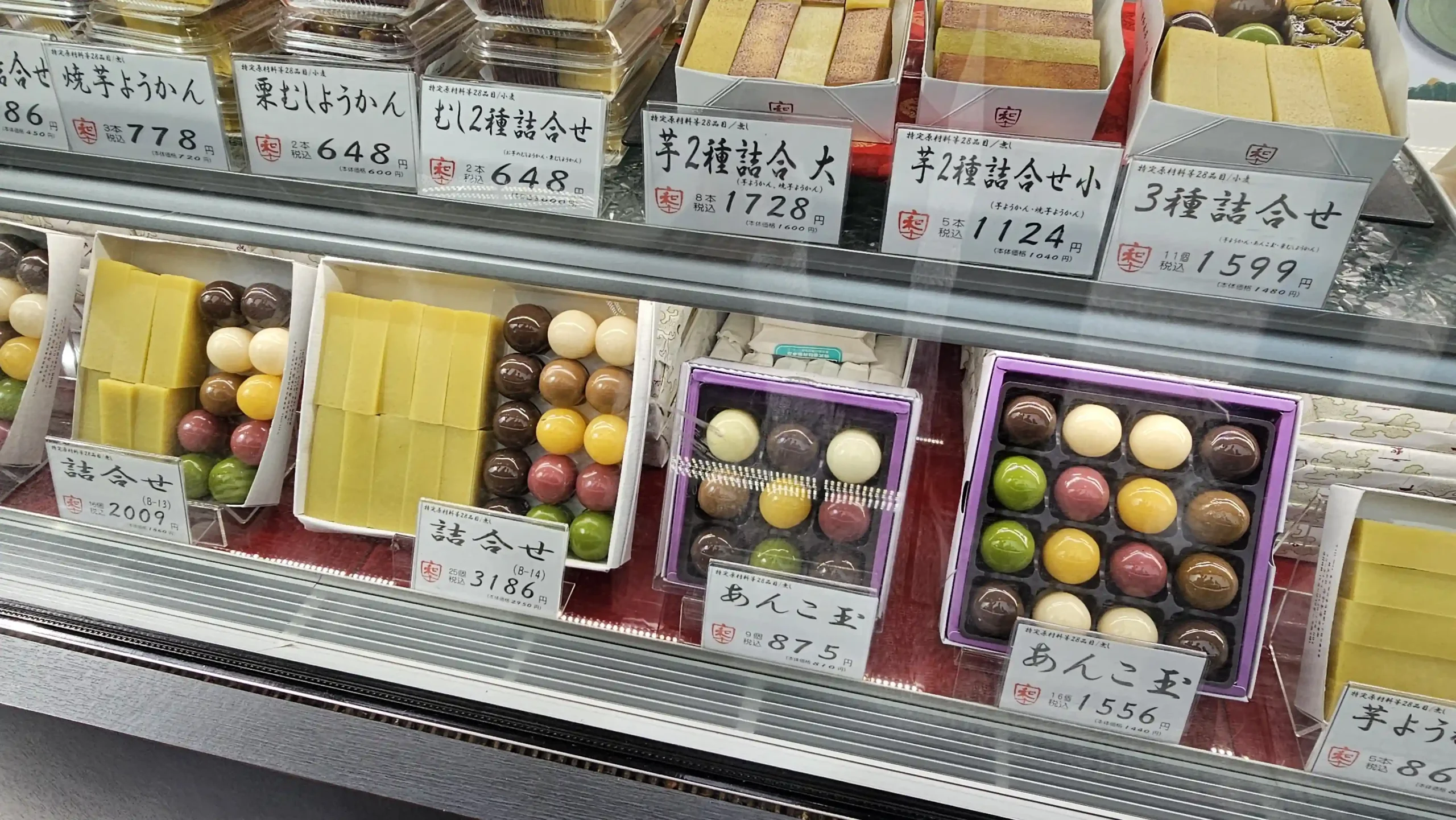
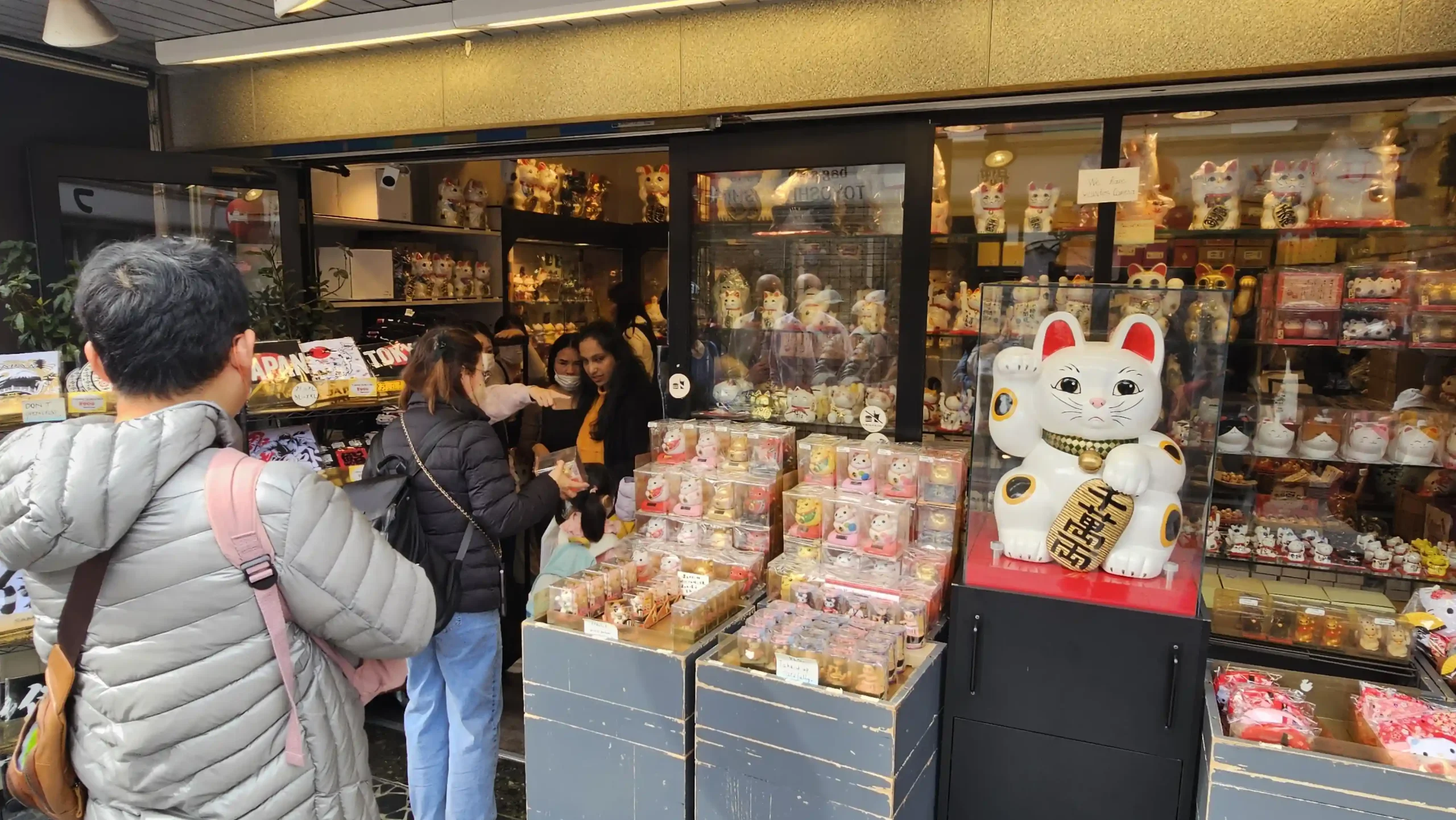
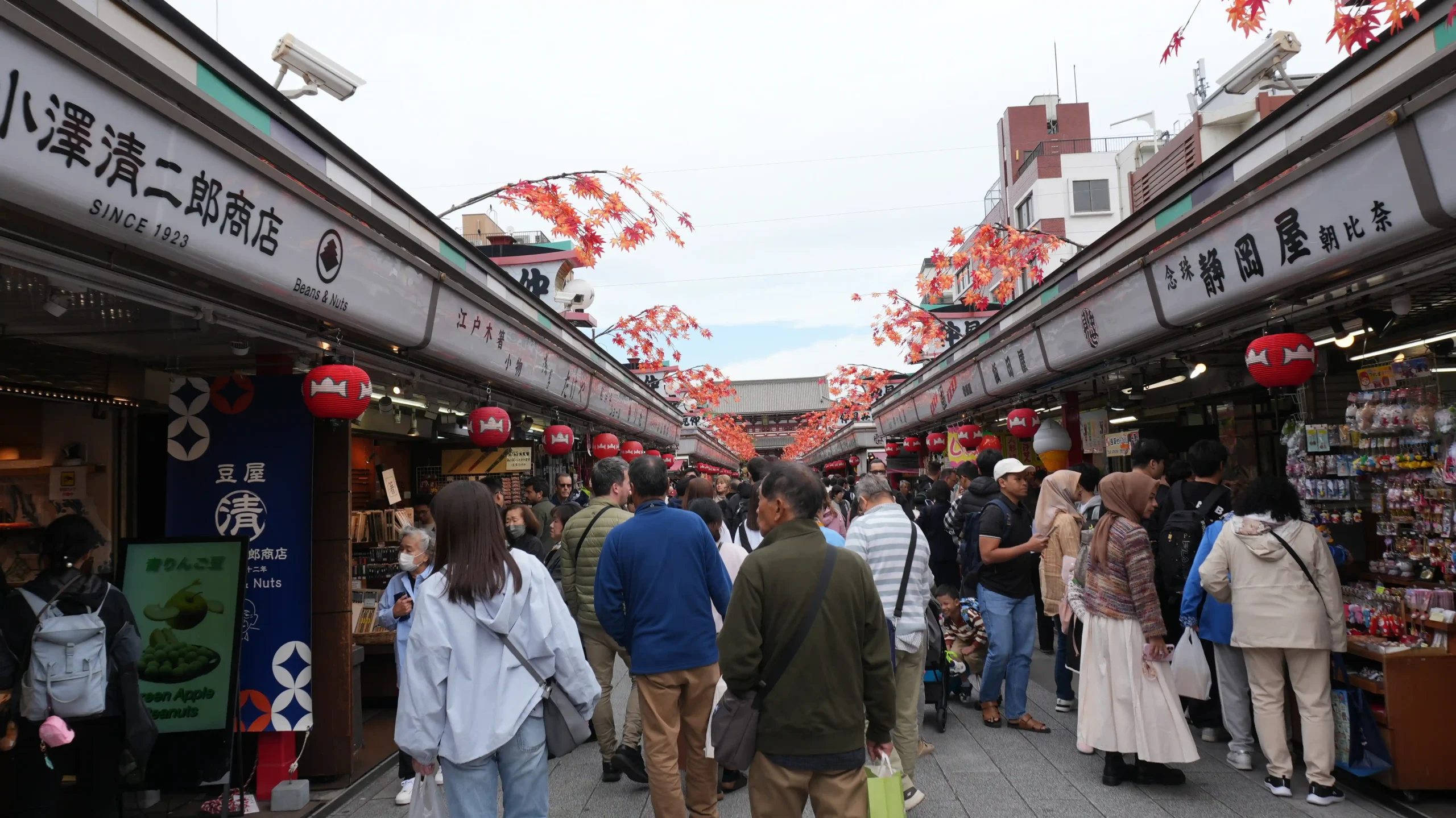
Nakamise is one of the oldest shopping street in Japan. Traditional Japanese toys, cakes, and other souvenirs are all sold here.

Bentendo Hall
Bentendo Hall houses a statue of the gray-haired female deity Sarasvati (Benzaiten), well known as one of the three prominent statues of Sarasvati (Benten) in the Kanto region. The Bentendo Hall bell was re-cast in 1692 on the order of Tokugawa Tsunayoshi. The bell became known amongst local residents as “the time bell,” and it is also featured in a haiku poem by Matsuo Basho:.
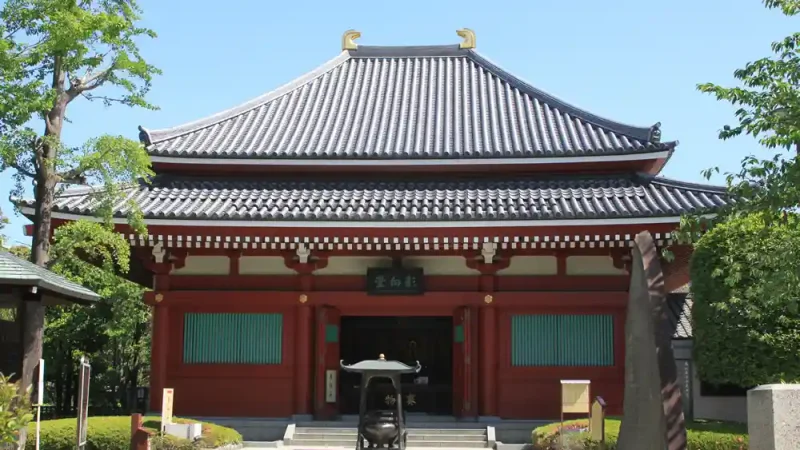
Yagodo Hall
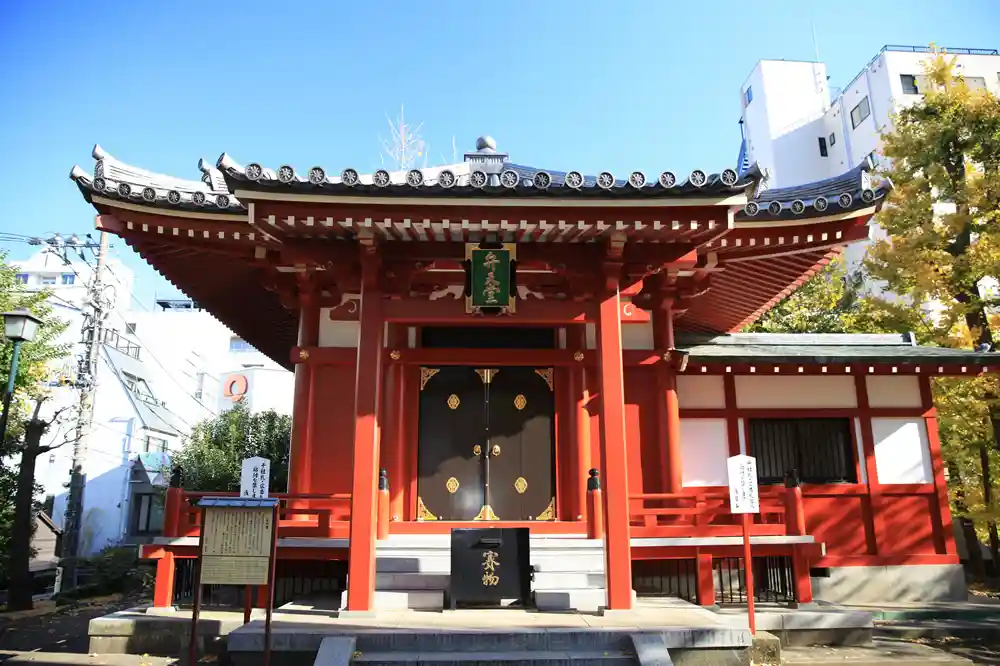
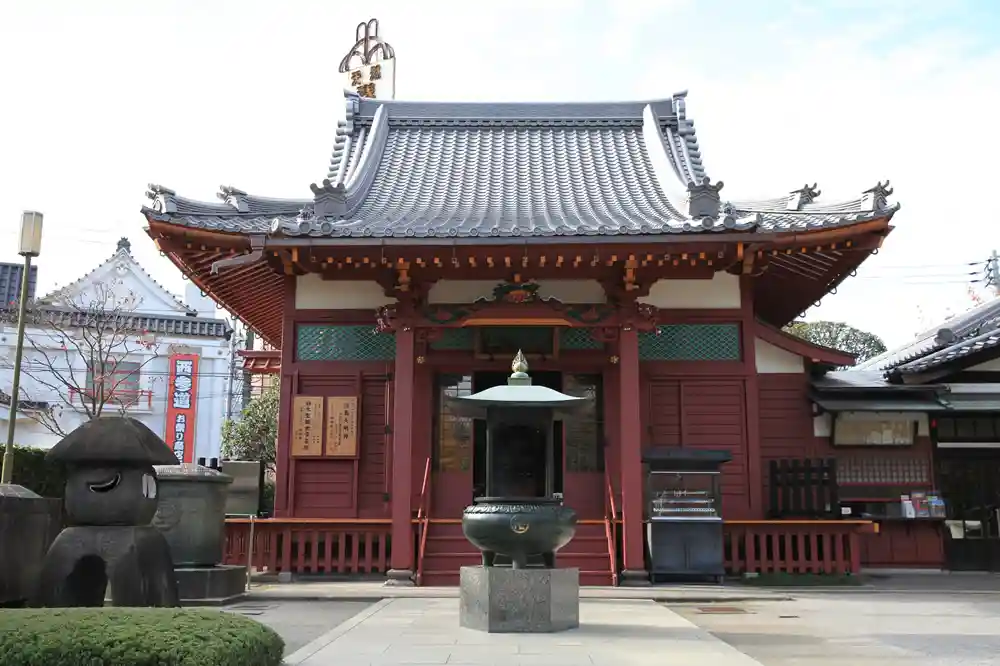
A group of Buddhas that follow the teachings of Bodhisattva Kannon and support the deity’s enlightened activity is called Yogoshu. Eight Buddhas are enshrined in Yogodo Hall, each of which protects one or two animals of the Chinese zodiac. In the Chinese zodiac, each of the years in the 12-year cycle is represented by an animal. The Buddha that protects each animal is also thought to protect those born in the year of that animal. Stamps from the Senso-ji Scarlet Seal are available here.
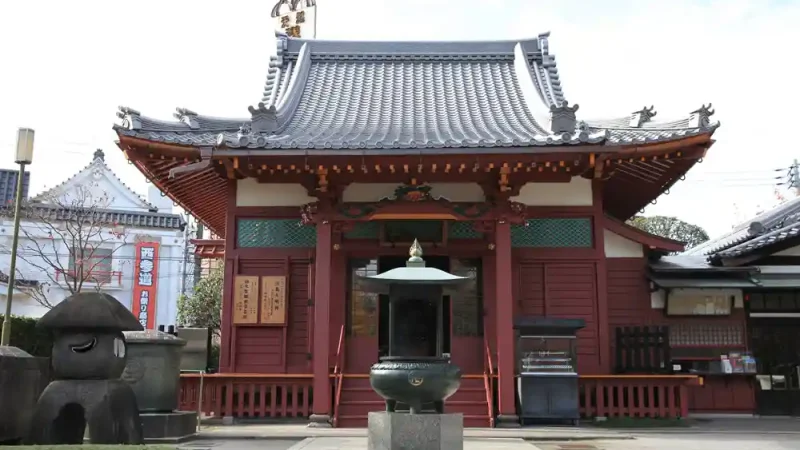
Awashimado Hall
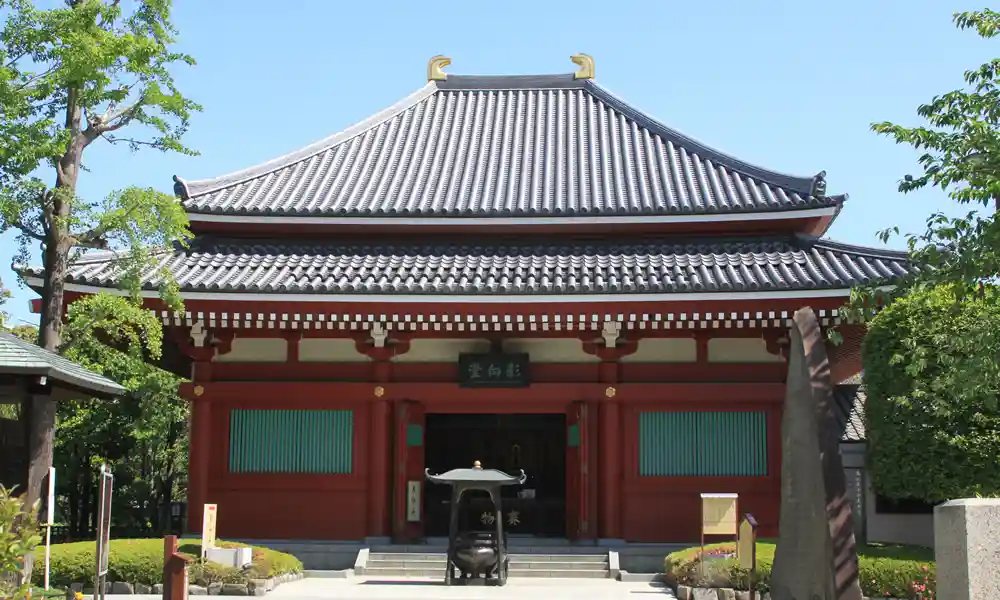
Awashimado Hall was built during the Genroku Period (1688-1704) to enshrine Awashima Myojin, a deity transferred from the mother shrine in Kada, Wakayama Prefecture. The principal image of Amitabha is placed in the middle with Awashima Myojin and Kokuzo Bosatsu (Ākāśagarbha) on its left and right. The current hall had been used temporarily as the Main Hall after World War II. It was moved to its present location and refurbished in 1994.

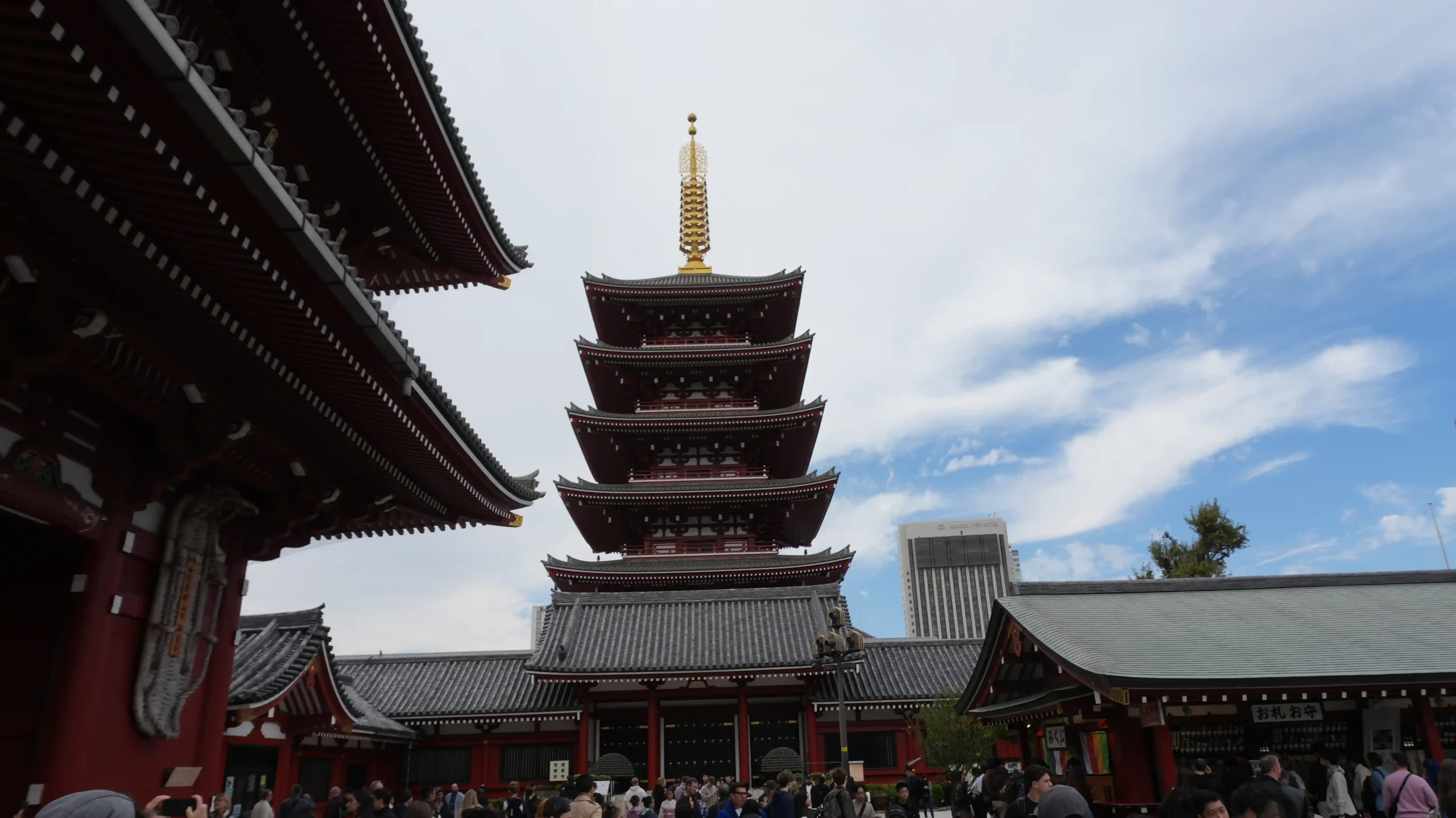
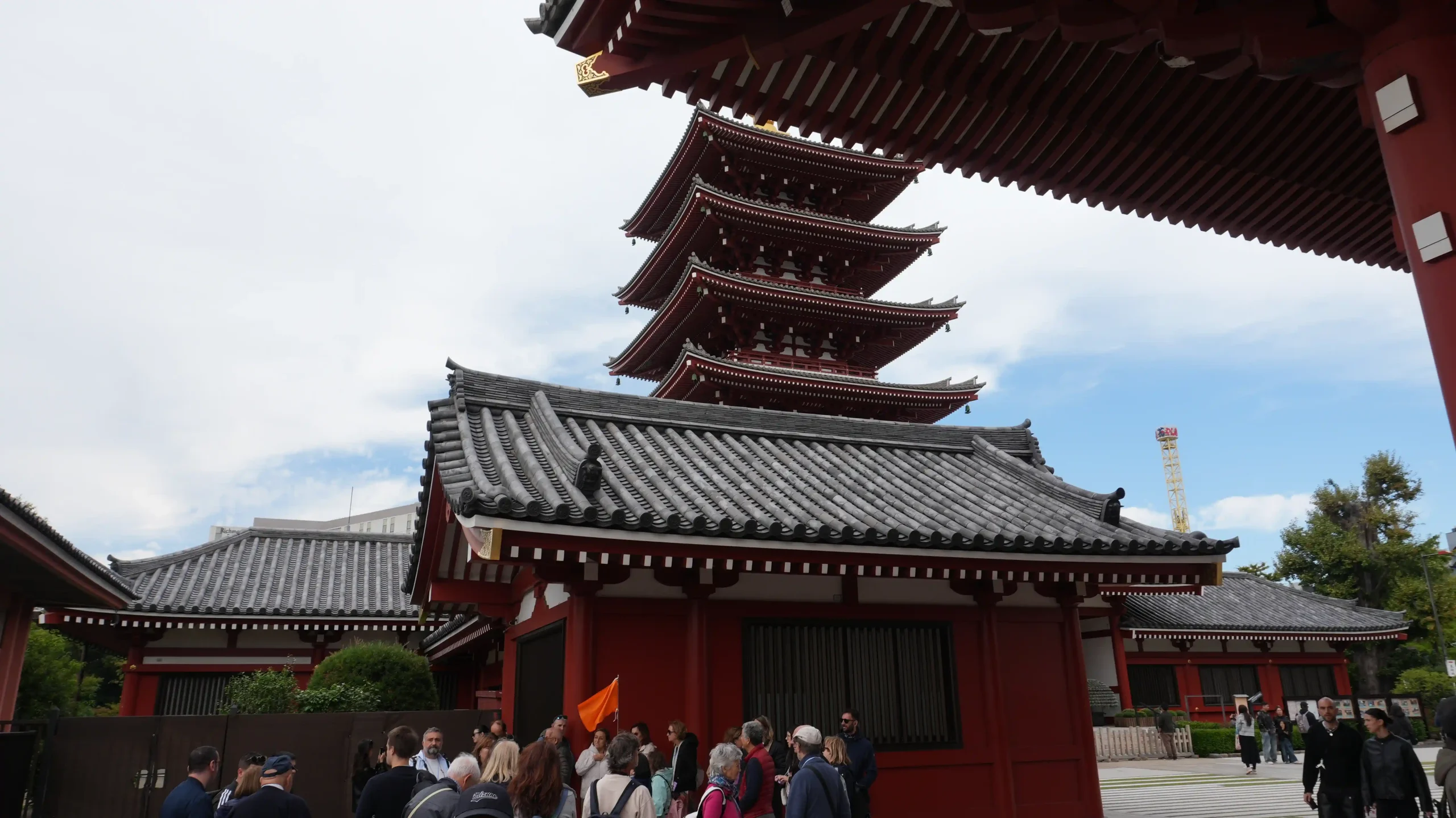
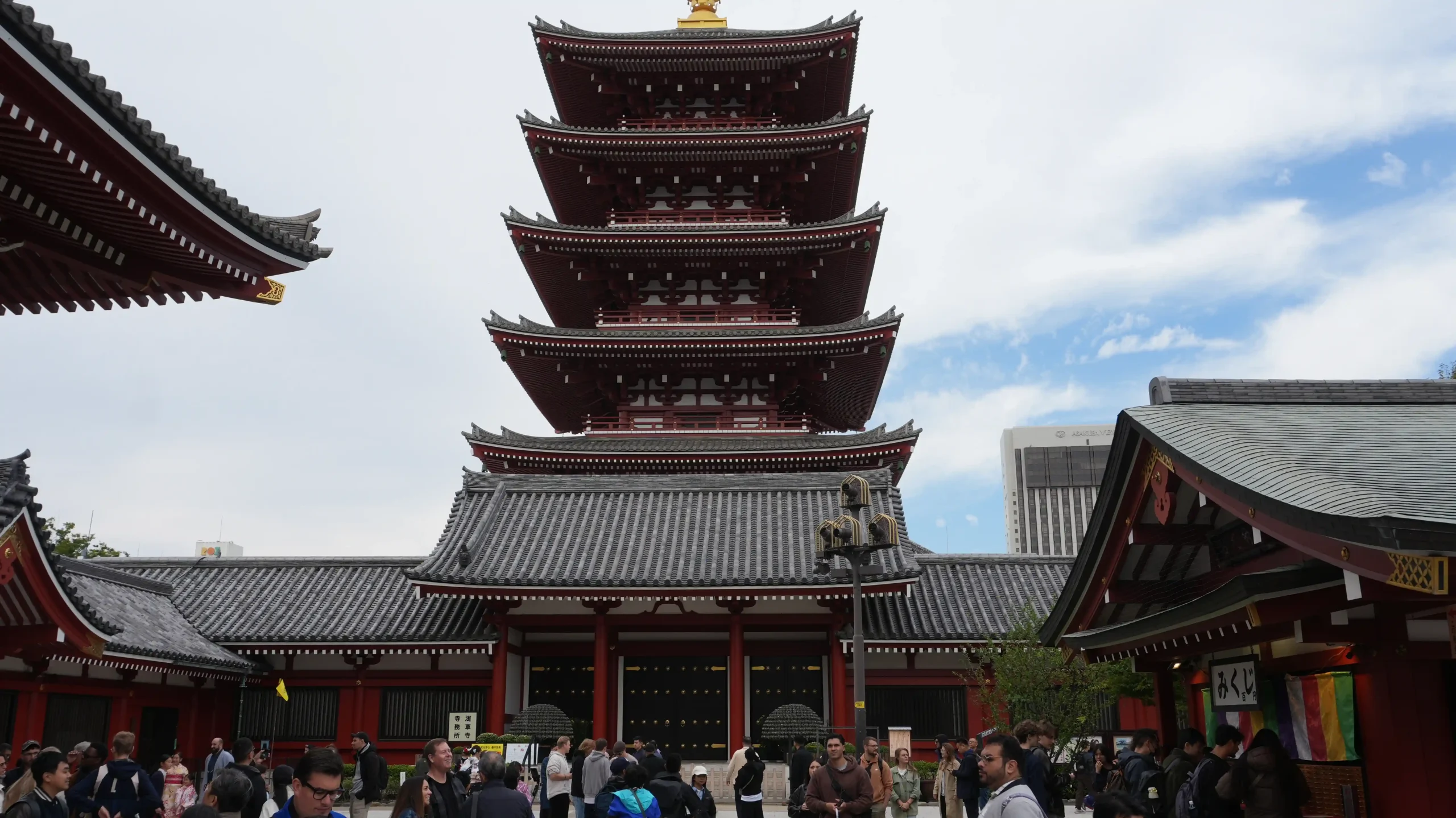
Five-Storied Pagoda
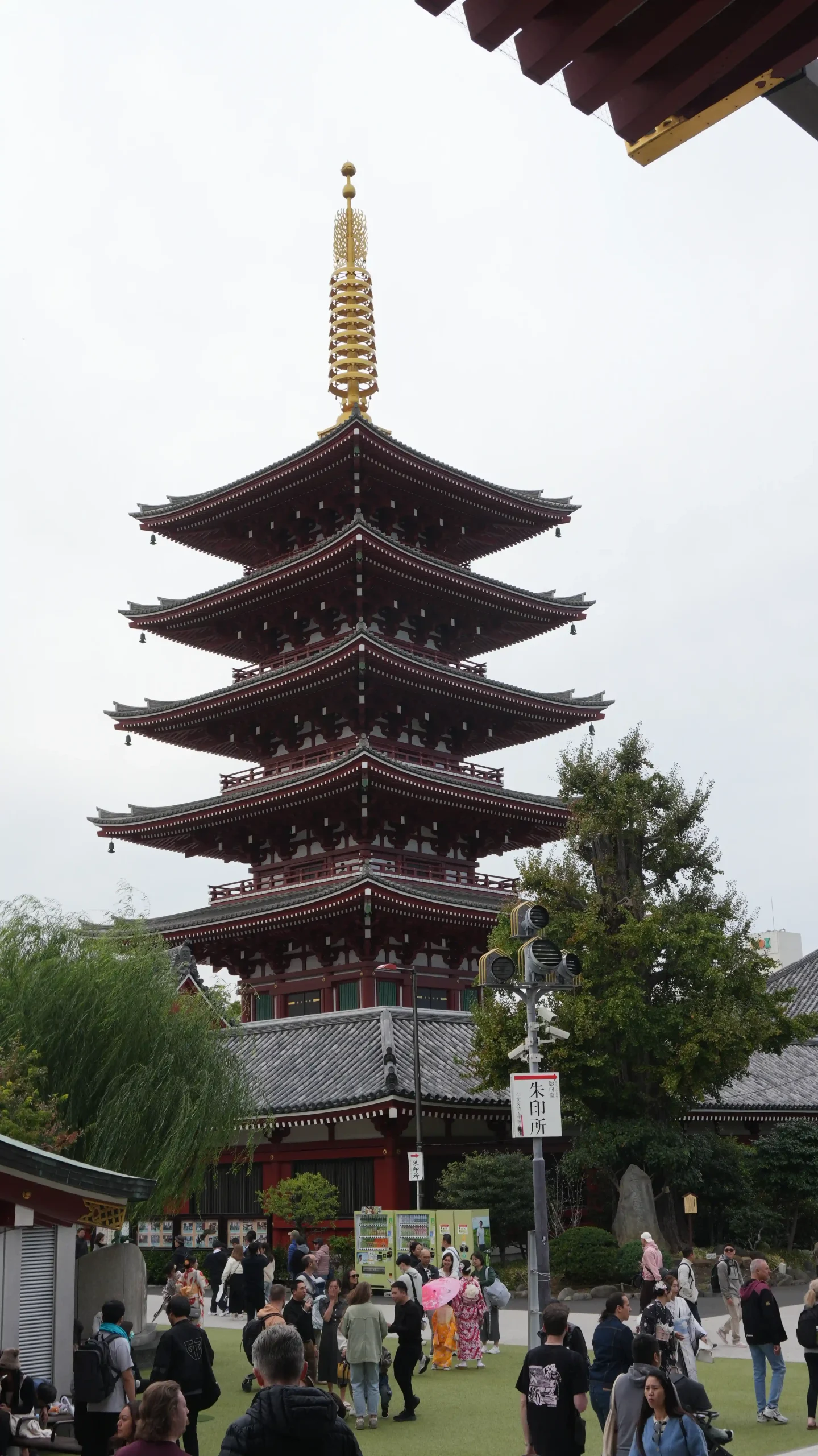
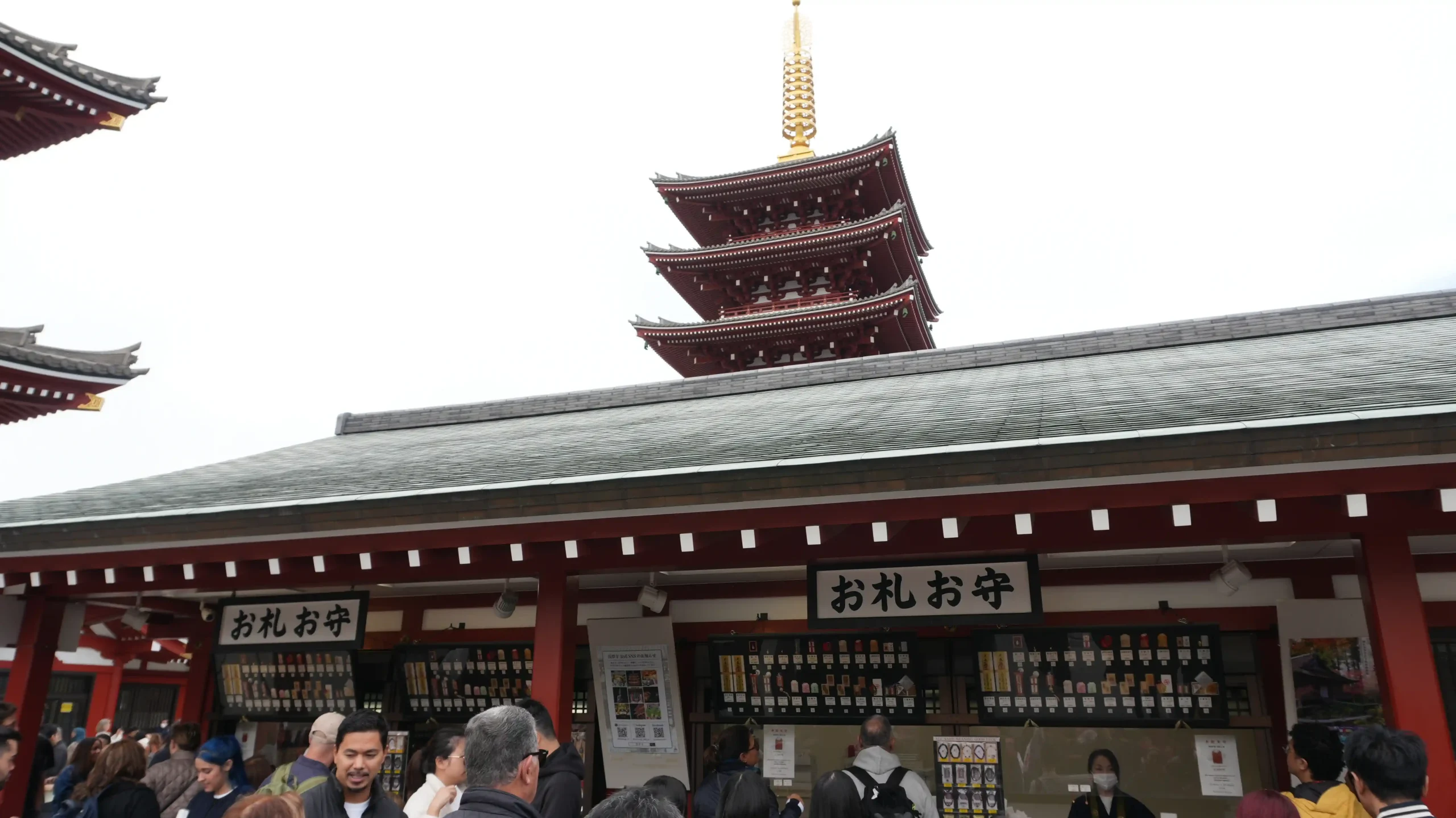
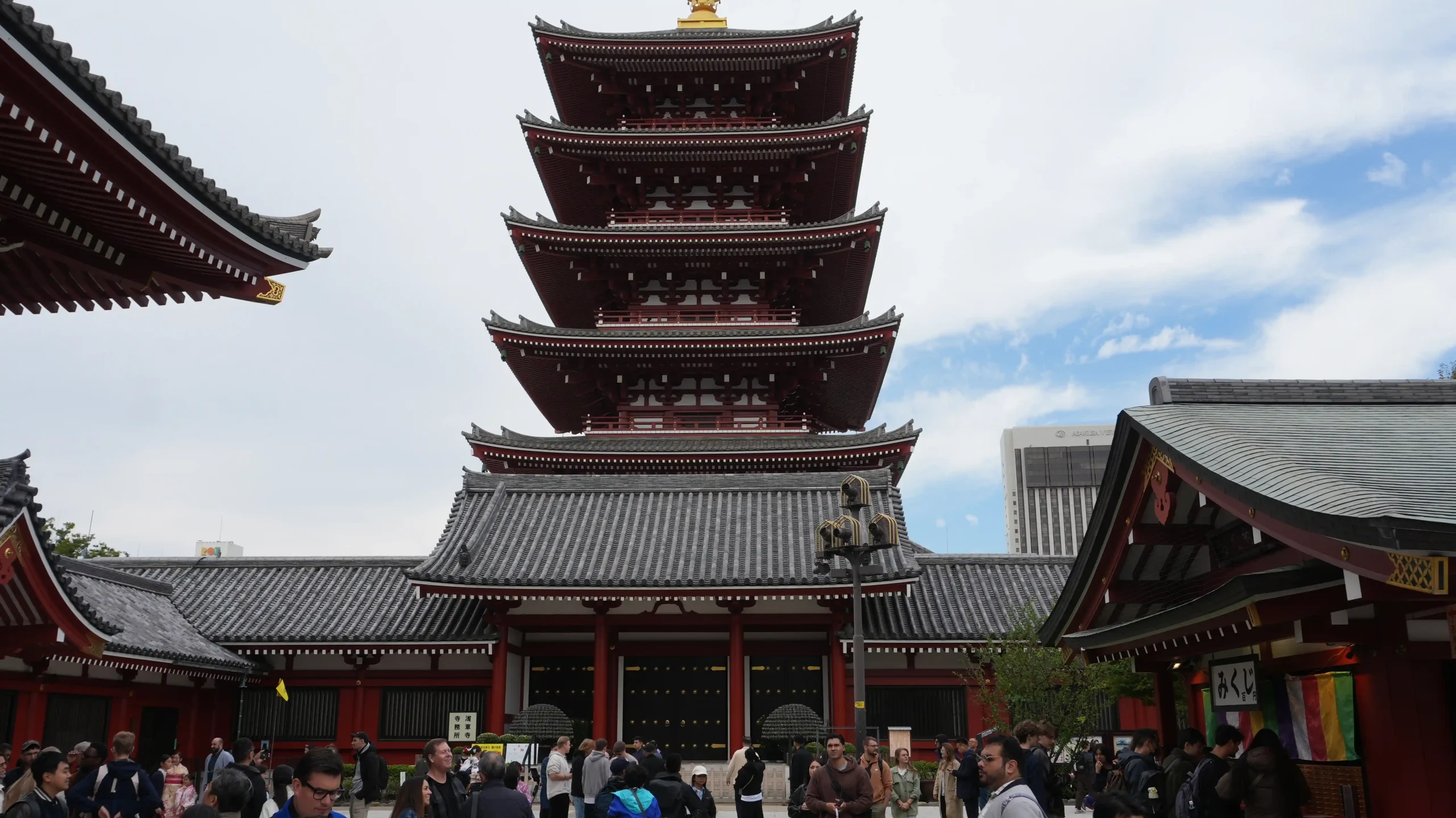
The Five-Storied Pagoda was first built in 942 by military commander Taira no Kinmasa. Tokugawa Iemitsu had the old national treasure rebuilt, but it was burned to the ground during the Great Tokyo Air Raid on March 10, 1945. It was rebuilt in 1973 with donations from devout believers around the nation. Busshari (Buddha’s ashes) were given as a gift from the royal temple of Sri Lanka.
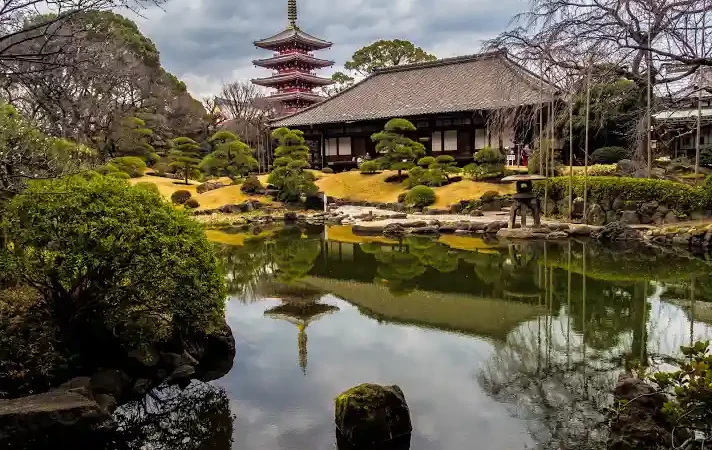
Denboin and It Garden
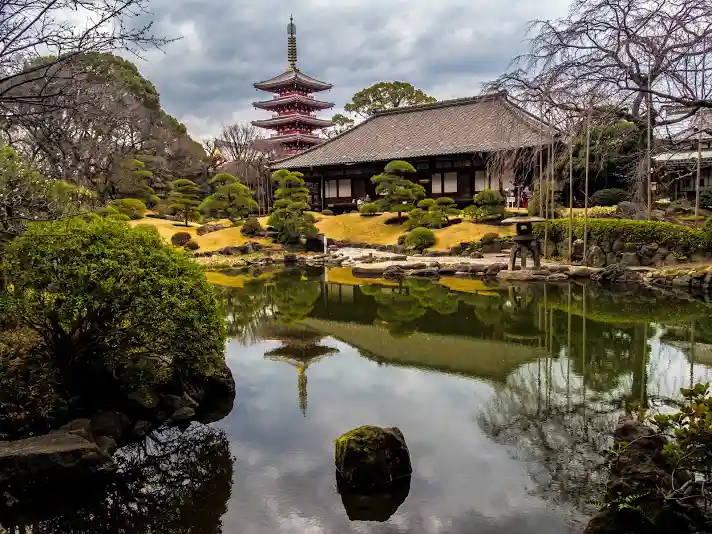
Demboin includes the Kyakuden (a building used to welcome guests), an entranceway, large and small Shoin (library and study rooms), and the Oima (living rooms) for the head priest of Senso-ji Temple. The Kyakuden was also used for memorial services and ascetic training. The Garden (closed to the public) has walking paths around a pond and is thought to have been built by Enshu Kobori in the early Edo Period (1603–1868).
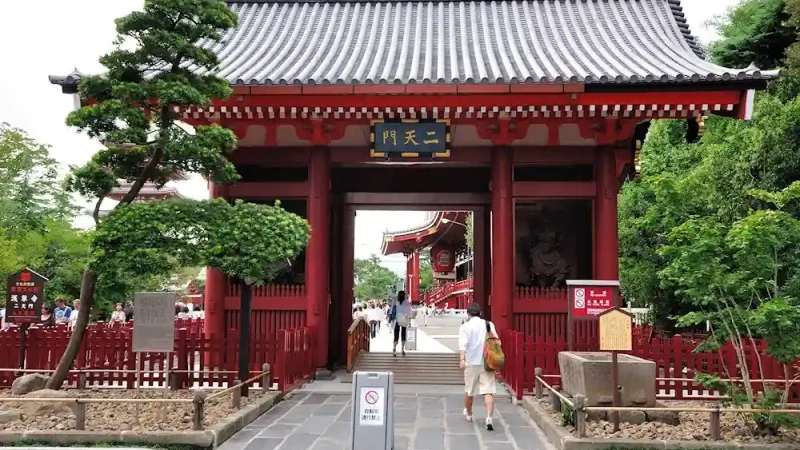
Niten-mon Gate
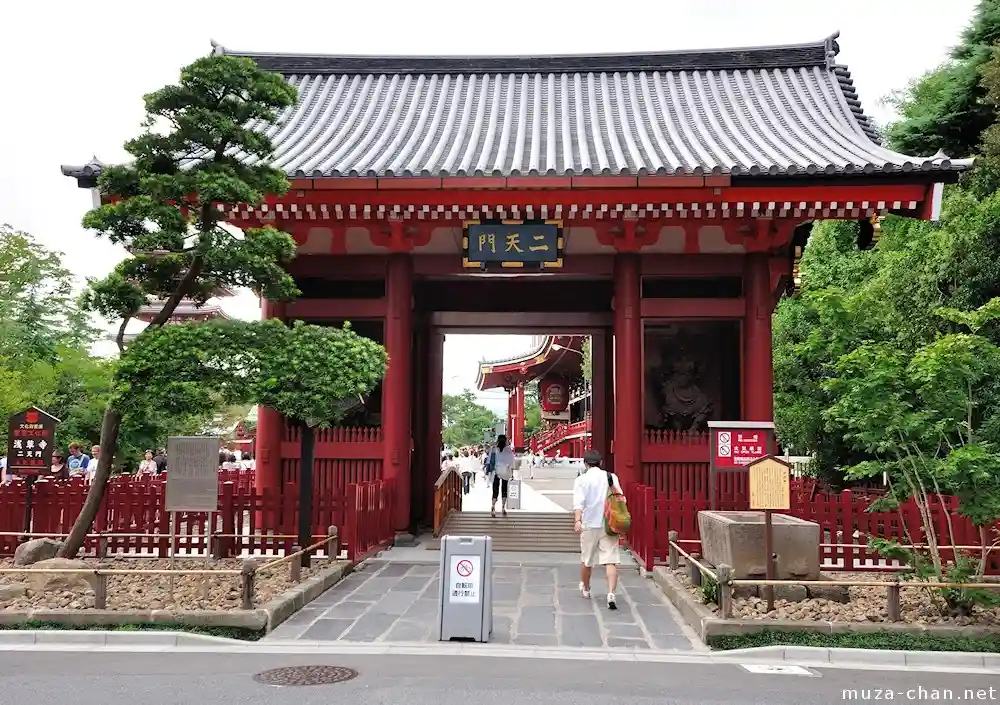
Niten-mon Gate was originally built in 1618 to protect the Tosho-gu Shrine in the precinct of Senso-ji . The current gate was built in 1649 as the East Gate of Senso-ji. In 2010, the gate was finally restored to its original state after repeated renovations over hundreds of years. Two protective Buddhist deities (“Ten”) called Zochoten and Jikokuten are positioned on the left and right sides of the gate. “Niten-mon” in Japanese means “the gate of the two Ten.”
Main Hall (Kannondo Hall)
Kaminari-mon Gate (Furaijin-mon Gate)
Hozo-mon Gate (Nio-mon Gate)
Nakamise Shopping Street
Bentendo Hall
Yagodo Hall
Awashimado Hall
Five-Storied Pagoda
Denboin and It Garden
Niten-mon Gate
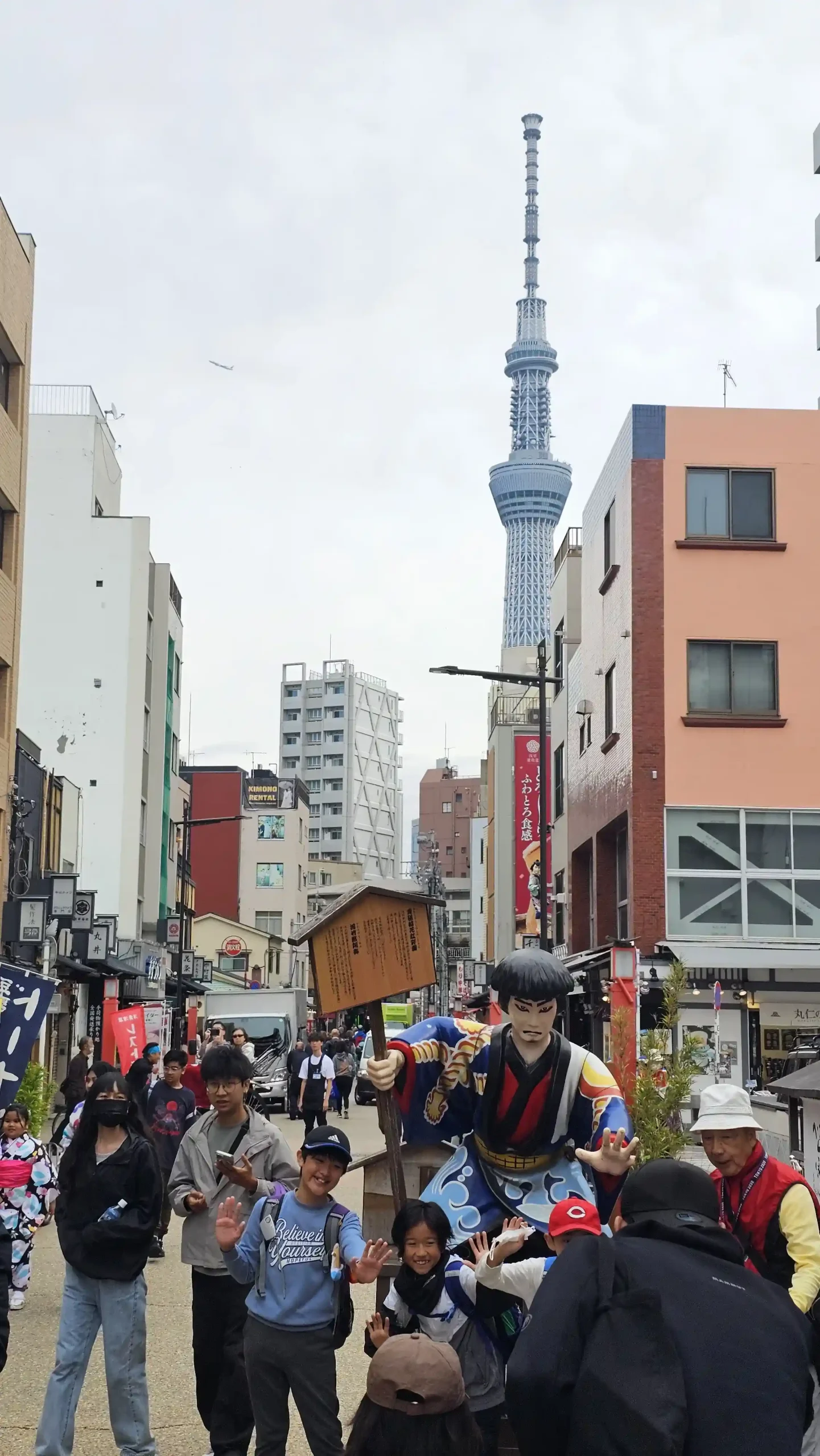
Sensoji Temple Streets