Tokyo Station Building, Marunouchi Station Building, 東京車站
The construction of Japan’s front gate, Tokyo Station, began in March, 1908 and it was opened in December, 1914. Kingo Tatsuno, the pioneer of modern architecture in Japan, designed it. The steel-framed, brick Marunouchi Station building was burned on the roof and interior in the 1945 air raid. After the War, it was restored up to the 2nd floor and in use for over 60 years. In 2003, it was designated as a national important cultural property. In 2012, while preserving the remaining building as much as possible, the lost 3rd floor was restored to its original state and the basement was equipped with extensive seismic isolation. The north and south domes are over 30m (98 ft)-tall, and their 1st and 2nd floors were redesigned with modern functions, while preserving the classic restored parts. The 3rd and 4th floors and the ceiling were restored to the 1914 state with eight amazing zodiacs and eagle engraving.
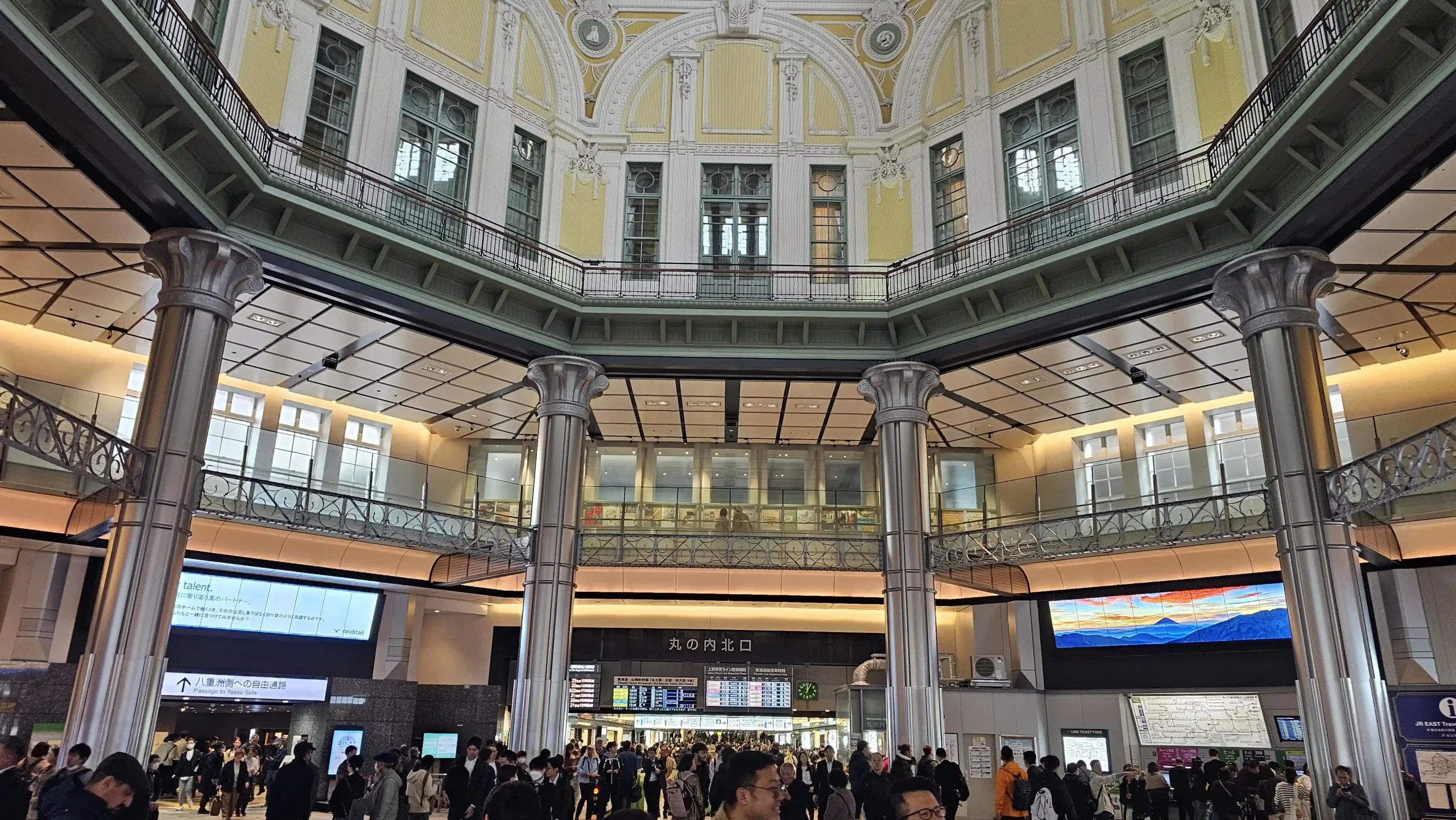
Tokyo Station Building
Tokyo Station, the largest train terminal station in Japan, is known as the gateway to the capital city. Known as the biggest number of train lines in JR East, there are 22 JR train lines and the Tokyo Metro Marunouchi line for a total of 23 lines.
The red-brick facade of the beautifully restored Tokyo Station Marunouchi Station building is one of the city’s most striking pieces of architecture, especially distinctive against the glass and steel of neighboring skyscrapers. Behind it lies one of the city’s key transport hubs, connecting the country through bullet trains that run to Hakodate in the far north and to Fukuoka in the far south. Not only does the station contain a wealth of shopping and eating opportunities, but the surrounding areas also offer some of the city’s best sights, from the impressive Marunouchi financial district to Nihonbashi, the downtown center of Edo, the Tokyo of the past.
Hop off a train, and head for one of the Marunouchi exits to go west, where you’ll find yourself just a stone’s throw from the Imperial Palace. Or take Yaesu exit to go east, where you’re just a few minutes’ walk from the commercial districts of Ginza and Nihonbashi.
Marunouchi Station Building Highlights
Highlights of Exterior Wall
Tokyo Station has continued its evolution as a landmark of Tokyo and has served as a major hub of the nationwide railway network in Japan since it opened in 1914.
During its construction stage, the station was provisionally referred to as “the Central Station.” It was then renamed “Tokyo Station” upon its inauguration. Since then, the station has contributed to the development of the surrounding business district, which functions as the center of Tokyo. It has borne witness to many defining historical moments that have shaped Tokyo and Japan over the course of a hundred years.
In 2012, Tokyo Station building, which is designated as an important cultural property of Japan, was successfully preserved and restored to its original state. Tokyo Station embodies harmony between the past and future, and it is creating a cultural bridge between Japan and the rest of the world as it develops into Tokyo Station City.

Gallery
Tokyo Station Building


